…
World
Ukraine: 414th Drone Brigade Strikes 13 Power Nodes in Occupied Crimea
Herz — World Desk · · 30s summary · 3 min read
The essentials
On the night of July 21 to 22, 2026, Ukraine's 414th Unmanned Aerial Vehicle Brigade struck 13 power nodes in occupied Crimea and Russian-controlled areas of Zaporizhzhia and Kherson provinces. The operation, dubbed the 'Crimean switch off,' was carried out by the elite 9th Battalion 'Kairos.' One FP1 drone targeted the 110 kV Alushta power station in occupied Crimea after four hours of flight, igniting a fire. The Ukrainian FP1 drones, produced by a Kyiv defense startup, can carry 50 to 100 kg of explosives and have a range exceeding 2,500 km.
- 13 power nodes struck in Crimea and Russian-controlled areas on July 21, 2026
- 110 kV Alushta substation in occupied Crimea caught fire after four hours of drone flight
- Ukrainian FP1 drones have a range exceeding 2,500 km and carry 50–100 kg of explosives
- Kairos Battalion has conducted hundreds of deep strikes since 2022
- Ukraine described as the world's leading power in unmanned weapon systems
What We Know
On July 21, 2026, Ukraine's 414th Unmanned Aerial Vehicle Brigade struck 13 power nodes in occupied Crimea and in Russian-controlled areas of Zaporizhzhia and Kherson provinces. The brigade, nicknamed 'Magyar's Birds,' named this campaign the 'Crimean switch off,' according to The Guardian.
In the early hours of July 22, around 1:00 a.m., a drone struck the 110 kV power substation in Alushta, a beach resort town on the southern coast of occupied Crimea. The impact triggered a fire. The aircraft had completed a four-hour flight before reaching its target.
The operation was conducted by the 9th Battalion 'Kairos,' an elite unit of the 414th Brigade specializing in long- and medium-range drone strikes. Its name refers to Kairos, the ancient Greek god of opportunity and the fleeting moment. The battalion is commanded by Lieutenant Colonel Ray.
The Ukrainian FP1 Drone
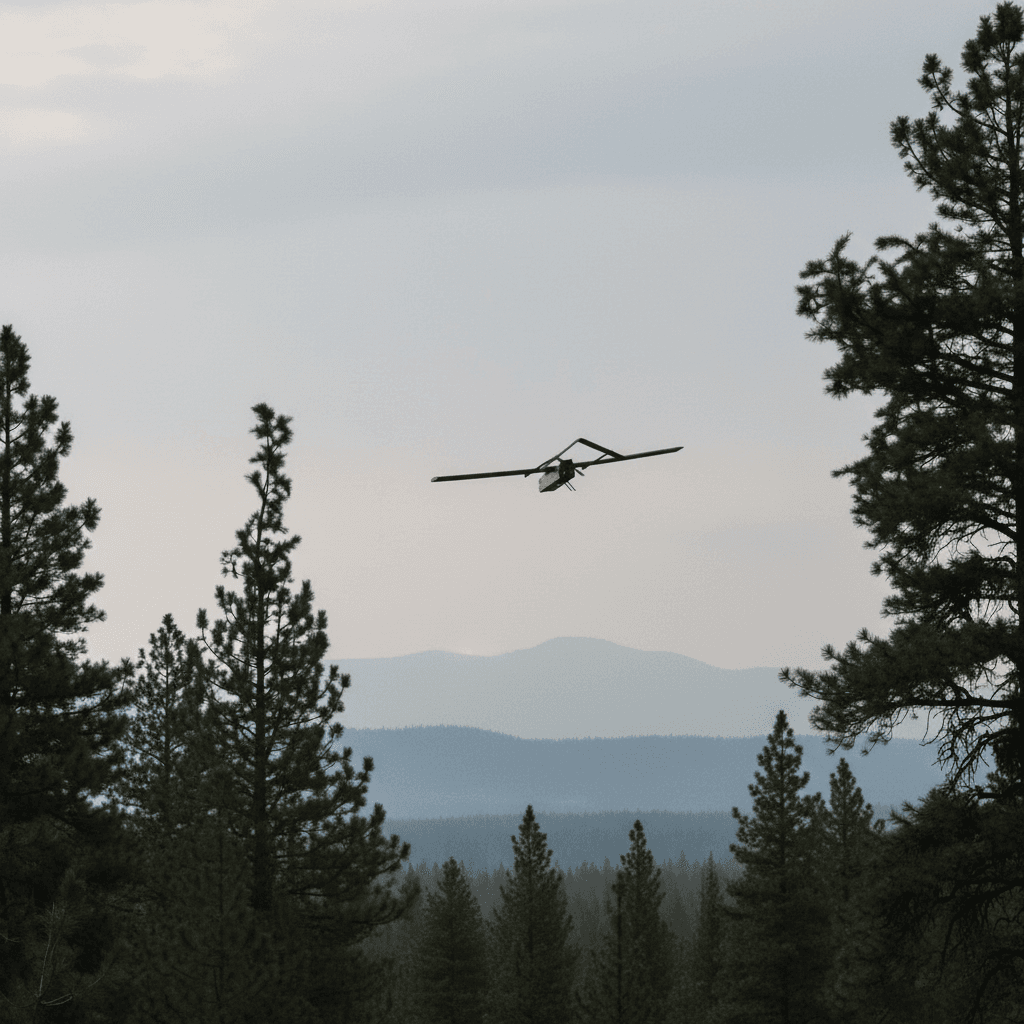
The strikes were carried out using FP1 long-range drones, manufactured in Kyiv by a defense technology startup. These aircraft have a gray biplane silhouette, with a propeller and wooden tail.
Each FP1 can carry between 50 and 100 kg of explosives. Its range exceeds 2,500 km, allowing it to reach all of European Russia and much of Siberia.
13
Power nodes struck simultaneously on July 21, 2026
110 kV
Voltage of the Alushta power substation struck and set ablaze in occupied Crimea
> 2,500 km
Maximum range of the Ukrainian FP1 drone
50–100 kg
Explosive payload carried by each FP1 drone
Context: The Drone War
Since February 24, 2022, Russia has conducted repeated nighttime attacks against Ukrainian cities and infrastructure networks. It employs Shahed 136 drones—low-cost Iranian-designed kamikaze aircraft—along with ballistic and hypersonic missiles.
These attacks have intensified since Donald Trump returned to the White House in January 2025. In response, Ukraine has developed its own defense industrial base and is now described as the world's leading power in unmanned weapon systems.
Before the July 21, 2026 operation, the Kairos Battalion had already conducted hundreds of deep strikes against Russian targets: oil refineries, warehouses, ammunition depots, ports, and road and rail logistics infrastructure.
Topics
Related articles



Latest articles


The illustrations in this article are generated by artificial intelligence.
Comments
No comments yet. Be the first to react.