…
Tech & Science
UK to train AI security systems with Ukrainian battlefield data
Herz — Tech & Science Desk · · 30s summary · 3 min read
The essentials
London and Kyiv concluded an agreement on August 24, 2026, to train artificial intelligence models using Ukrainian battlefield data. The systems are intended to protect British military sites and critical infrastructure from protesters and hostile states. An initial pilot at a UK defence site will combine buried fibre-optic cables with AI-enhanced sensors designed to distinguish movements by people and vehicles. Private companies will require Ministry of Defence approval to access the data through a secure platform. Sintela, Mind Foundry and Skyral have already received approval for pilot projects.
- London and Kyiv concluded the agreement on August 24, 2026
- Ukrainian operational data will be used to train UK security models
- The first trial will take place at a British defence site
- Three British companies have received approval for pilot projects
What is known
London and Kyiv concluded an agreement on August 24, 2026, to train artificial intelligence models using Ukrainian operational data. According to The Guardian, the tools are intended to protect British military sites and critical infrastructure.
The systems will be designed to identify protesters or an attack by a hostile state. Presented as the first agreement of its kind in the UK, the system will be tested at a British defence site.
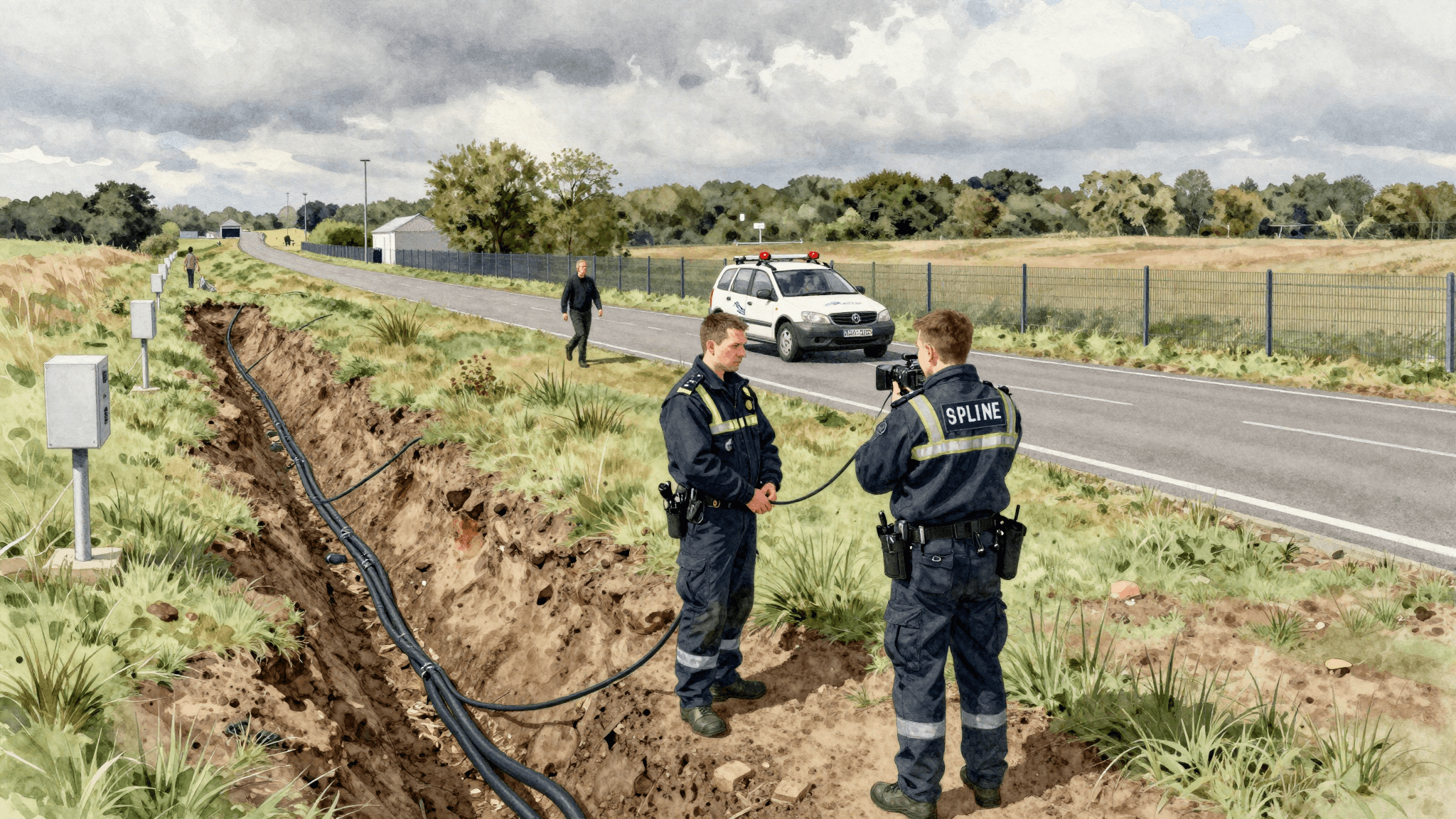
The pilot will use AI-enhanced sensors integrated into buried fibre-optic cables. They are intended to distinguish different movements by people or vehicles around sensitive sites.
Controlled access to Ukrainian data
Private companies will be able to access data from Ukraine’s Avengers AI lab through a secure platform. Every request will require approval from the UK Ministry of Defence.
The data includes drone operations, imagery from strike missions and Ukrainian flight profiles. It may also cover Russian attempts to sabotage critical infrastructure.
The military dataset covers four years. It provides a deeper record than the mainly open-source data previously used to train models outside Ukraine.
Three companies involved in the pilots
Sintela, Mind Foundry and Skyral have already received approval for pilot projects. All three are British companies working in artificial intelligence.
Bristol-based Sintela, which specialises in fibre-optic sensors, has also signed a contract with the Trump administration to monitor the US-Mexico border. The contract is worth $35 million, equivalent to £26 million.
4 years
Period covered by the Ukrainian military data
$35 million (£26 million)
Value of Sintela’s US border-monitoring contract
3
British companies approved for pilot projects
Potential uses across the UK
If the technology proves effective, the government is considering deployment at airports, prisons, rail networks and energy infrastructure. The electricity grid and military bases are also among the sites identified.
The government ultimately hopes the models will rapidly anticipate threats or tensions caused by hostile actors against railways, the electricity grid or military bases.
Topics
Source
Related articles

Latest articles



The illustrations in this article are generated by artificial intelligence.
Comments
No comments yet. Be the first to react.