…
World
Russia’s military recruitment slows as losses mount in Ukraine
Herz — World Desk · · 30s summary · 3 min read
The essentials
Nearly five years into the war, Russia is struggling to recruit enough soldiers to replace its losses in Ukraine. Voluntary enlistment is slowing despite high pay, while Western estimates put Russian casualties at more than 30,000 killed and wounded each month. Moscow recruits about 1,000 soldiers a day, but most are used to replenish depleted ranks rather than expand offensive capacity. The Kremlin has relied on well-paid, indefinite contracts since September 2022, when Vladimir Putin mobilised 300,000 reservists. Lawyers and activists have documented increasingly coercive recruitment practices, but there is no indication that Putin has decided on another general mobilisation.
- Voluntary recruitment is slowing despite high pay.
- Western estimates put Russian losses above 30,000 killed and wounded a month.
- Moscow recruits about 1,000 soldiers a day, mainly to replace losses.
- There is no indication that a new general mobilisation has been decided.
- Activists and lawyers have documented increasingly coercive recruitment methods.
What we know
Nearly five years into the war, Russia is struggling to recruit enough soldiers to replenish its ranks as voluntary enlistment slows and its forces suffer heavy losses in Ukraine, The Guardian reports.
Russia’s summer offensive has stalled, while Vladimir Putin has shown no sign of abandoning his extensive territorial claims.
Aleksei Tabalov, a human rights activist who leads an organisation assisting Russian conscripts, says it is becoming much harder for the Kremlin to find volunteers, even with very high pay on offer.
New recruits are largely replacing losses
Western estimates put Russian losses at more than 30,000 killed and wounded each month. The level has been linked to attritional tactics that repeatedly send small assault groups into action despite heavy casualties.
Moscow recruits about 1,000 soldiers a day, according to calculations by Russia specialist Janis Kluge of the German Institute for International and Security Affairs. Most of these recruits replace lost personnel rather than materially increase Russia’s offensive capacity.
The reliance on voluntary contracts
Since September 2022, Moscow has avoided another mobilisation by relying mainly on highly paid voluntary contracts. It has recruited about 1.3 million military personnel under this system.
The offers particularly target Russia’s poorest regions. Signing bonuses and salaries can amount to several years of local income, while families are offered substantial compensation if a recruit is killed.
The contracts run for an indefinite period. People familiar with the Kremlin’s thinking say the authorities are currently seeking to pressure more men into signing rather than risk another mobilisation.
Putin has also recently signed a law expanding the category of convicted prisoners allowed to enter into contracts with the Russian military.
More coercive methods documented
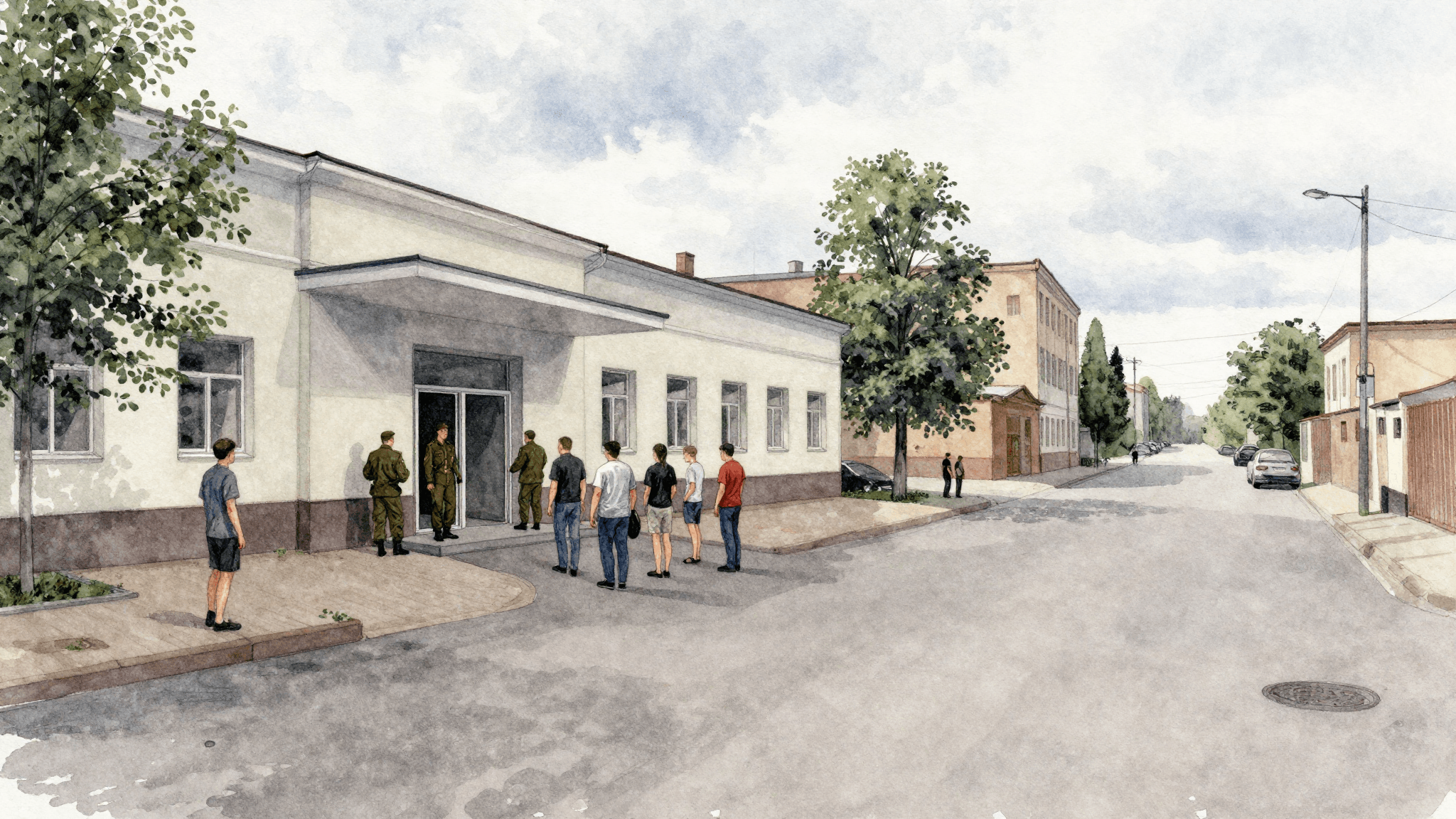
During the summer, lawyers and activists documented increasingly coercive recruitment methods in several Russian regions. Men were reportedly stopped in the street by police, taken from their workplaces or summoned by the authorities.
Ivan Chuviliaev, a spokesperson for Get Lost, an organisation that helps Russian soldiers desert, says officials are exploiting fears of mobilisation to accelerate contract signings.
According to Chuviliaev, men are encouraged to sign immediately and collect a bonus before any possible forced conscription. He says it remains impossible at this stage to know whether a mobilisation will actually take place.
No decision on a new general mobilisation
Senior Russian officials have rejected reports that mobilisation is imminent. Former president Dmitry Medvedev described them as nonsense and a false Ukrainian provocation.
Two people familiar with discussions in Moscow and a senior Western official said there was no indication that Putin had decided on another general mobilisation.
Topics
Source
Related articles
Latest articles
The illustrations in this article are generated by artificial intelligence.
Comments
No comments yet. Be the first to react.