…
World
Nepal and Tibet: More Than 1,300 Missing After Himalayan Flash Flood
Herz — World Desk · · 30s summary · 3 min read
The essentials
More than 1,300 people are missing in Nepal and China after a flash flood in the Himalayas, according to ANSA and Die Zeit. The reported death toll differs by source: ANSA says 165 bodies have been recovered in Nepal, while Die Zeit reports at least 163 deaths across the border region. A glacier collapse triggered an avalanche of ice and debris that blocked the Lhende River before releasing a flood wave. Rescuers have saved 104 people in Nepal, but mud and blocked roads are hampering access.
- More than 1,300 people are missing across Nepal and China.
- Reported death tolls differ: 165 bodies recovered or at least 163 dead.
- A glacier collapse triggered an avalanche and then a flash flood.
- Rescuers have saved 104 people in Nepal.
- Mud and blocked roads are hampering rescue operations.
What we know
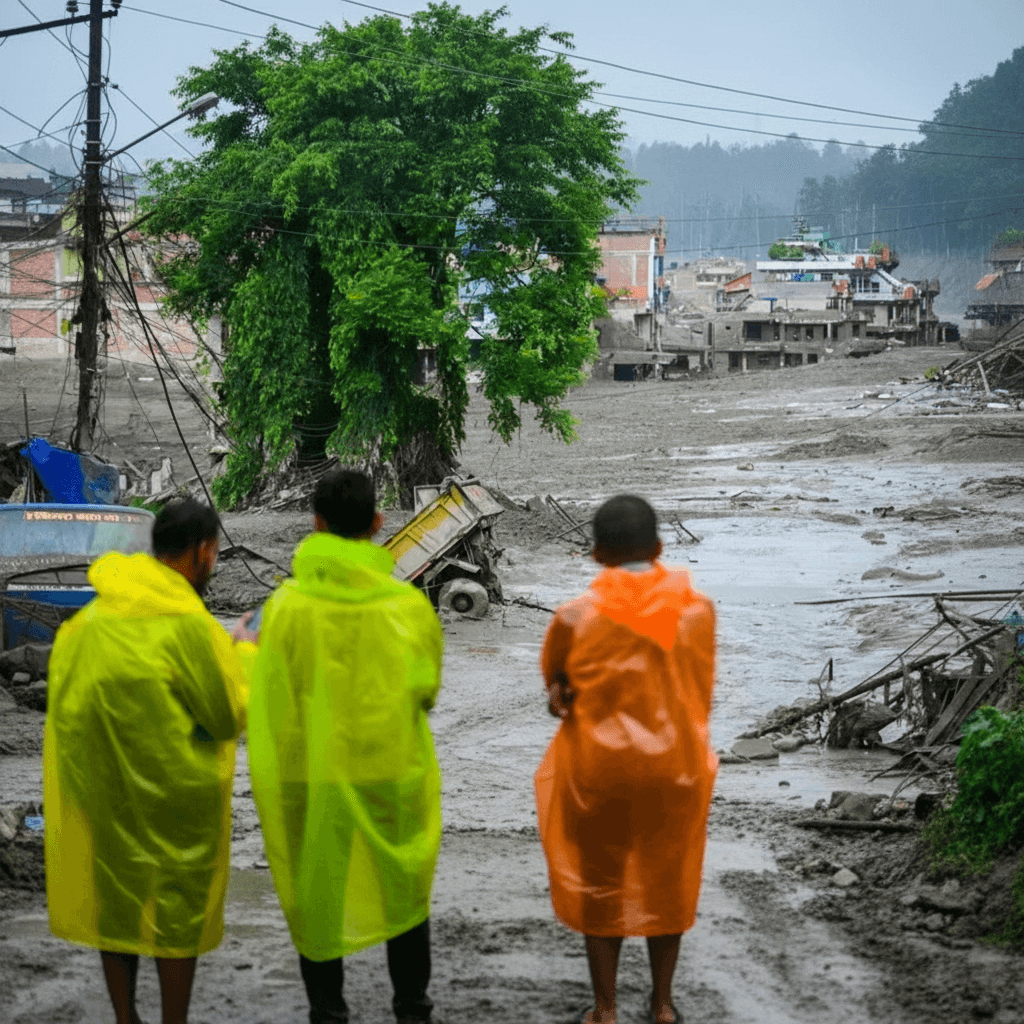
More than 1,300 people are missing in Nepal and China after a flash flood in the Himalayas, according to ANSA and Die Zeit.
The death toll varies between sources and geographic areas. ANSA reports that Nepalese authorities have recovered 165 bodies in Nepal, while Die Zeit reports at least 163 deaths across the Nepal-Tibet border region.
In Nepal, 826 people are missing. That figure includes 85 members of the security forces: 44 soldiers, 28 police officers and 13 members of the Armed Police Force.
Chinese authorities reported this morning that 558 people were missing after a landslide along the Nepal-Tibet border. The total includes 260 foreign nationals.
Rescuers have saved 104 people, mainly in Nepal's Rasuwa, Nuwakot and Dhading districts. Search operations resumed in the early hours of this morning.
Glacier collapse triggered the flood
The US Geological Survey, the US government agency responsible for Earth science, analyzed a signal recorded at 8:37 a.m. local time on Wednesday.
Initially measured as a magnitude 5.2 tremor, the event was not an earthquake. The USGS identified it as a glacier collapse followed by an avalanche of ice and debris.
An expert from the International Centre for Integrated Mountain Development, cited by Die Zeit, said the avalanche first blocked the Lhende River. The barrier later gave way, releasing the flood wave.
- Wednesday at 8:37 a.m. local timeA magnitude 5.2 signal is recorded in the border region.
- After the collapseIce and debris initially block the Lhende River before the barrier gives way and releases the flood.
- WednesdayAn earlier count reports 403 tourists missing in Nepal.
- This morningSearch operations resume in Nepal as Chinese authorities report 558 people missing.
Villages and infrastructure swept away
Topics
Source
Related articles


Latest articles



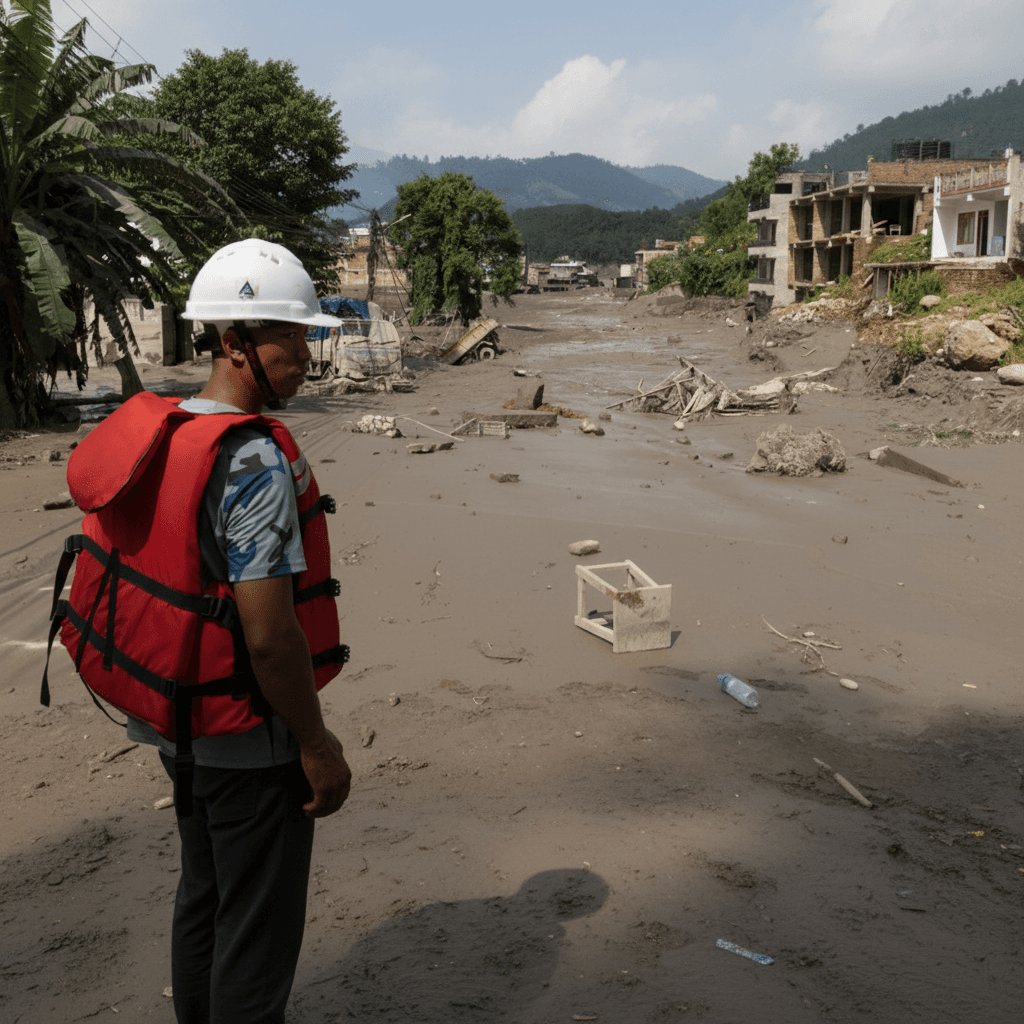
The illustrations in this article are generated by artificial intelligence.
Comments
No comments yet. Be the first to react.