…
World
World's first low-carbon cement pilot facility opens in Baden-Württemberg
Herz — World Desk · · 30s summary · 3 min read
The essentials
A pilot facility for low-carbon cement production has been built in Heidenheim, in the Mergelstetten district of Baden-Württemberg, about 50 kilometers north of Ulm. Four European cement manufacturers have invested more than €120 million in this facility. The facility uses an oxygen-fired rotary kiln that produces nearly pure CO2, making it easier to capture. It can produce up to 450 tonnes of clinker per day. According to Thyssenkrupp Calvion, the company holding the technology, this is the world's first research facility of this type equipped with its own clinker production line.
- Over €120 million invested by four European cement makers at the Heidenheim pilot facility.
- World first: oxygen-fired kiln with integrated clinker production line.
- Captured CO2 fate undecided: industrial reuse (CCU) or submarine storage (CCS).
- Germany adopted CO2 geological storage law in early 2026.
- EU targets 90% reduction in greenhouse gas emissions by 2040.
What we know
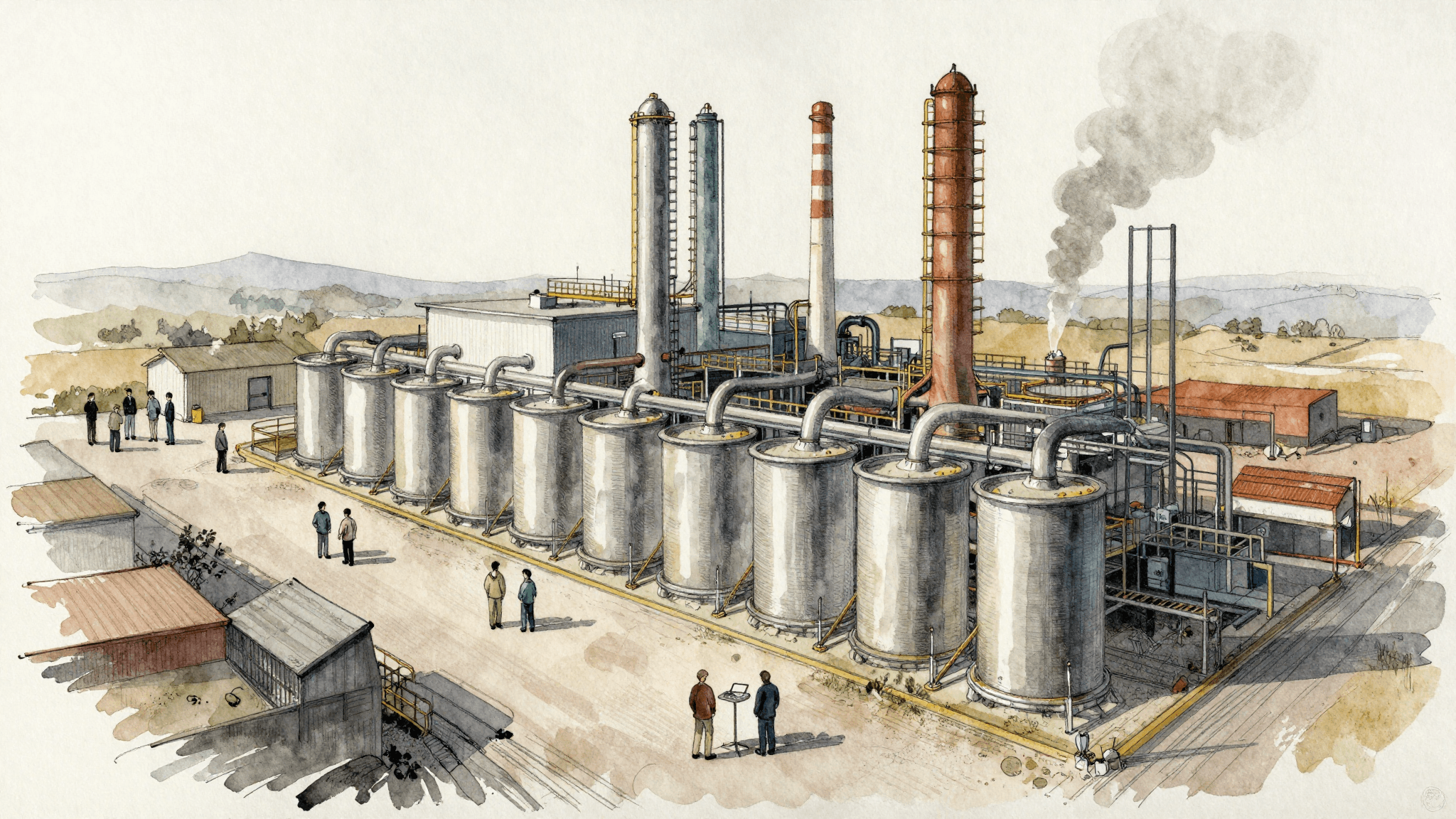
A pilot facility for low-carbon cement production has been built in Heidenheim, in the Mergelstetten district of Baden-Württemberg, about 50 kilometers north of Ulm. Four European cement manufacturers have invested more than €120 million in this facility, according to Handelsblatt.
The process uses a rotary kiln fired with pure oxygen, rather than ambient air. This approach produces a nearly pure CO2 stream that is easier to capture. The facility can produce up to 450 tonnes of clinker per day.
The technology is owned by Thyssenkrupp Calvion, a subsidiary of thyssenkrupp Polysius GmbH specializing in industrial decarbonization. Its spokesperson Hannah Berse says this is the world's first research facility of this type equipped with its own clinker production line. The process viability has also been demonstrated, according to the same source.
Context: Binding climate goals
The EU has set a binding climate target: reduce greenhouse gas emissions by 90% by 2040 compared to 1990 levels. Baden-Württemberg's climate law calls for at least a 65% reduction by 2030 and climate neutrality by 2040.
The Bundestag — Germany's federal parliament — adopted a law on CO2 geological storage in early 2026. This legislation authorizes the capture and storage of CO2 from cement and lime production on the seafloor, except in protected natural areas.
The numbers
> €120 million
Investment by four European cement makers in the pilot facility
450 tonnes/day
Maximum clinker production capacity of the facility
−90%
EU greenhouse gas reduction target by 2040 (baseline 1990)
−65%
Baden-Württemberg greenhouse gas reduction target by 2030 (baseline 1990)
7–10 years
Estimated timeframe to build CO2 transport and storage infrastructure
Topics
Related articles



Latest articles



The illustrations in this article are generated by artificial intelligence.
Comments
No comments yet. Be the first to react.