…
World
Southern Lebanon: nine dead, including three children, in two Israeli strikes
Herz — World Desk · · 30s summary · 3 min read
The essentials
Two Israeli airstrikes killed nine people, including three children, and wounded eleven others on August 15, 2026, in southern Lebanon. According to the New York Times and the Guardian, this is the deadliest toll since June agreements that brought a lull between Israel and Hezbollah. Seven people died in Ansar, and two in Deir al-Zahrani. Israel says it targeted Hezbollah infrastructure in response to attacks against its soldiers.
- Nine people were killed, including three children.
- The two strikes also wounded eleven people.
- Seven deaths were recorded in Ansar and two in Deir al-Zahrani.
- Israel says it targeted Hezbollah infrastructure.
- Lebanon's prime minister condemns a dangerous escalation.
What we know
Two Israeli airstrikes killed nine people, including three children, and wounded eleven others on August 15, 2026, in southern Lebanon.
The New York Times and the Guardian report this is the deadliest toll since June agreements that brought a lull between Israel and Hezbollah.
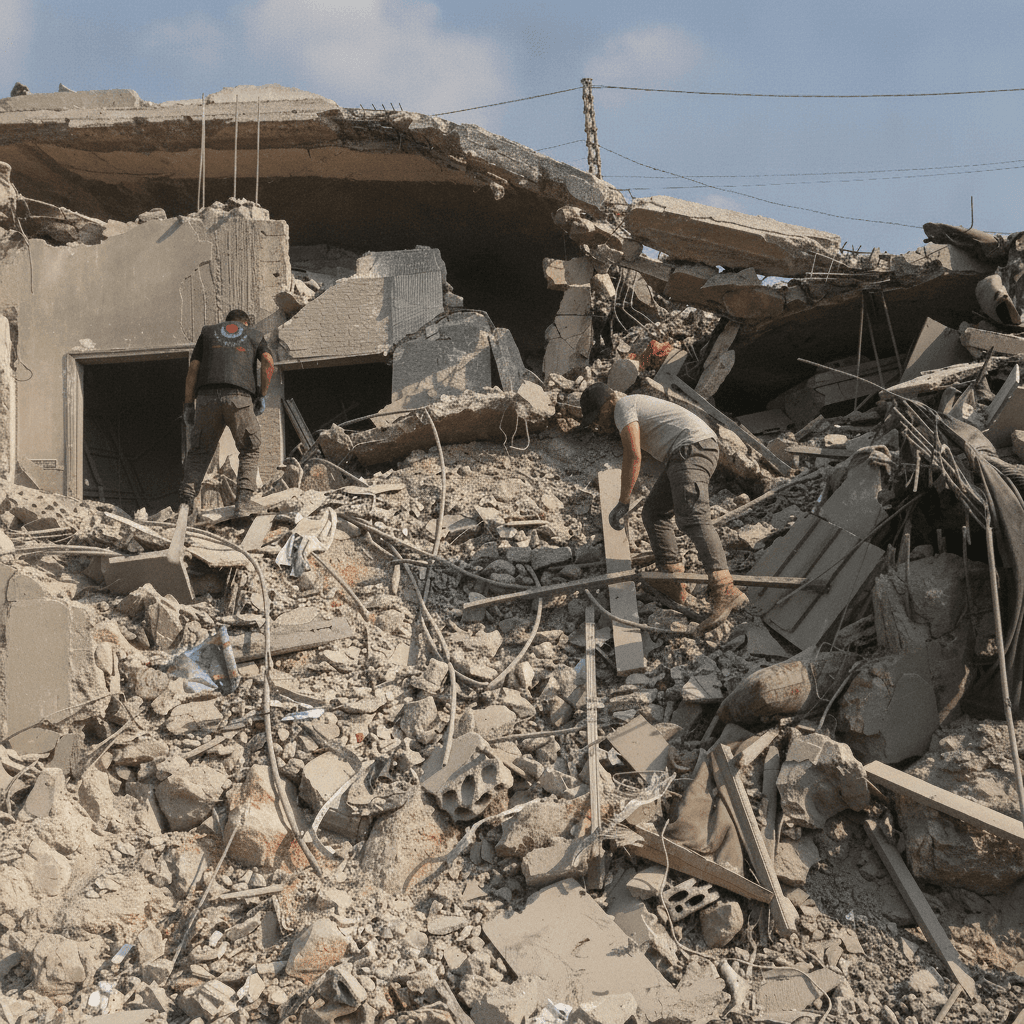
The first strike destroyed a house on the outskirts of Ansar early Saturday morning. It killed seven people, as rescue workers searched for survivors and bodies.
A few hours later, a house was struck in Deir al-Zahrani. Two people were killed and nine others wounded.
Ansar7
Deir al-Zahrani2
An Israeli drone also targeted a motorcycle in Nabatieh. The fate of the driver was unclear.
After the strikes, residents fled northward. Roads leaving Nabatieh and neighboring villages were congested.
Israel's position
Israeli military spokesperson Ella Waweya said Israel had attacked "Hezbollah infrastructure" in Ansar and Nabatieh.
She presented the strikes as a response to attacks by Hezbollah fighters against Israeli soldiers in the Ali Taher area.
The Israeli military says the Ali Taher hill hosts significant underground command and control centers for Hezbollah. It has been bombing this area for months.
The two struck villages are not located within the 231 square miles that Israel has claimed and occupies in southern Lebanon.
Lebanon's government responds
Lebanese Prime Minister Nawaf Salam called the strikes "extremely dangerous." He said they undermine efforts to stabilize the south.
He called on Israel to stop the escalation. He also argued that the seven victims in Ansar, including children and women, were not military targets.
Other reported operations in the south
Topics
Source
Related articles
Latest articles
The illustrations in this article are generated by artificial intelligence.
Comments
No comments yet. Be the first to react.