…
World
Saudi Arabia: military turning point against Iran and its networks
Herz — World Desk · · 30s summary · 3 min read
The essentials
Saudi Arabia has abandoned its posture of restraint to openly assume its military operations against Iran-backed networks, according to Le Monde on July 30, 2026. This turning point occurs within a sequence of regional escalation: during the night of July 29-30, the U.S. Central Command (CENTCOM) struck dozens of targets in Iran, killing at least 3 people. The United States and Riyadh then conducted joint strikes in Iraq, causing 20 deaths including 5 Iranian military advisors. Three oil tankers were hit in the Strait of Hormuz and pro-Iranian groups are threatening Saudi assets.
- Riyadh now openly assumes its operations against pro-Iranian networks
- CENTCOM: dozens of targets struck in Iran during night of July 29-30, 2026
- U.S.-Saudi joint strikes in Iraq: 20 deaths including 5 Iranian military advisors
- Three oil tankers hit in Strait of Hormuz during same escalation sequence
- Pro-Iranian groups threaten Saudi assets in retaliation
What we know
Saudi Arabia now openly assumes its military operations against Iran-backed networks, according to Le Monde on July 30, 2026. This shift marks a strategic turning point after years of restraint in the face of Iranian provocations.
The kingdom's energy infrastructure has been struck repeatedly by pro-Iranian actors. Its export routes have also been weakened. These cumulative pressures are identified as a determining factor in Riyadh's change in military posture.
The late-July 2026 escalation
During the night of July 29-30, 2026, CENTCOM—the U.S. Central Command responsible for American military operations in the Middle East from its base in Qatar—struck dozens of targets in Iran.
These strikes targeted the IRGC (Islamic Revolutionary Guard Corps), an Iranian paramilitary organization reporting directly to the Supreme Leader. Iran had previously launched missiles against American bases in Jordan, an act that triggered CENTCOM's response.
At least 3 people were killed in Iran following these strikes, according to Iranian media.
On July 30, the United States and Saudi Arabia jointly struck pro-Iranian militias in Iraq, causing 20 deaths including 5 identified Iranian military advisors.
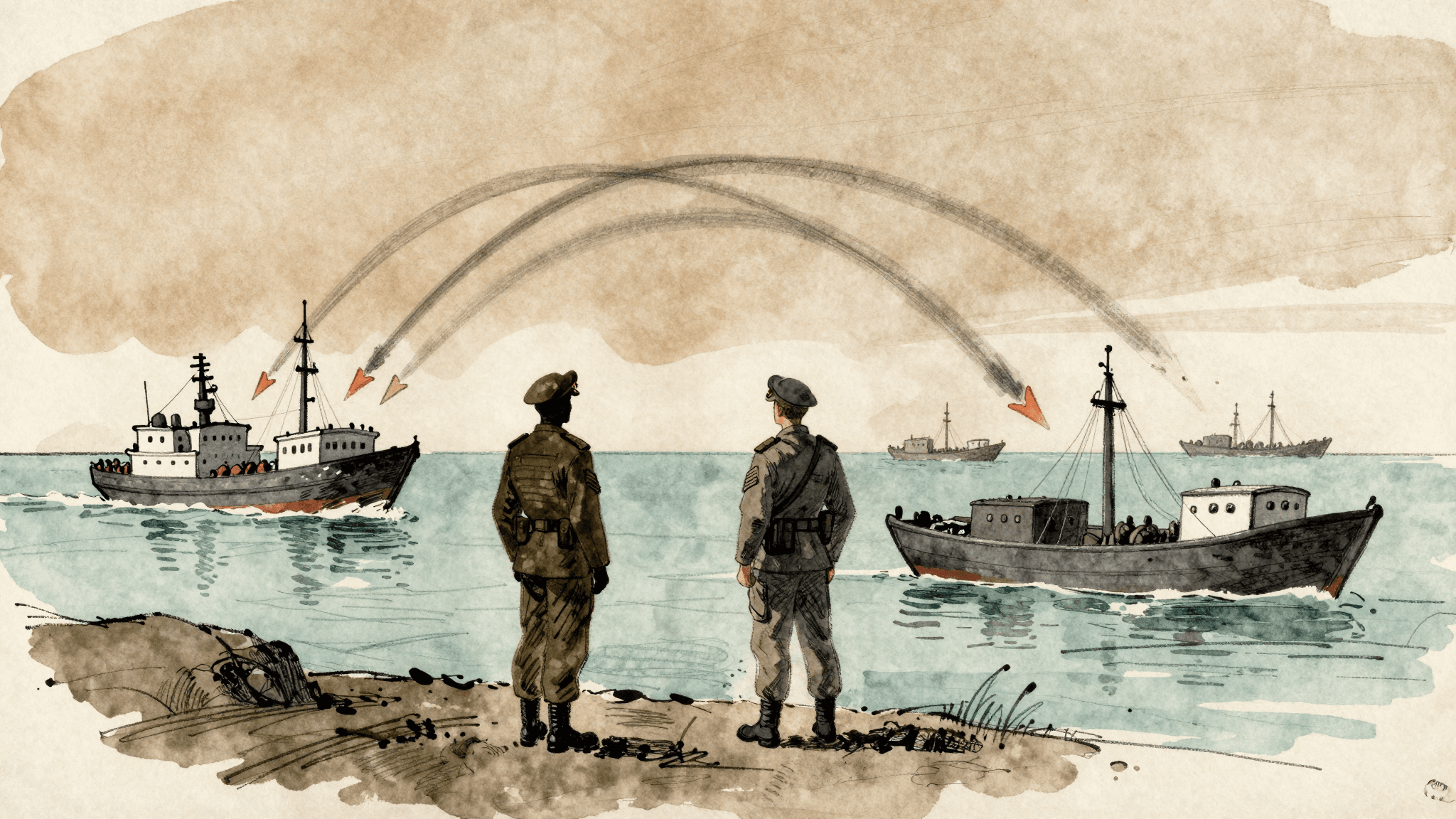
In the same sequence, three oil tankers were hit in the Strait of Hormuz—a strategic maritime passage connecting the Persian Gulf to the Gulf of Oman, essential for regional oil exports. An American ship was also set ablaze in Egypt.
Context: From restraint to retaliation
Saudi Arabia long privileged a posture of restraint in the face of Iranian provocations, seeking to avoid direct escalation. The turning point documented by Le Monde represents a major strategic shift for Riyadh.
Repeated strikes on Saudi energy infrastructure and the weakening of its export routes have constituted cumulative pressures. These factors are presented as determining in Riyadh's decision to engage militarily in an open manner.
Timeline
- Before July 29, 2026 (exact date unspecified)Pro-Iranian networks strike Saudi energy infrastructure multiple times and weaken the kingdom's export routes.
- Before July 29, 2026 (exact date unspecified)Iran launches missiles against American bases in Jordan, an act that triggers CENTCOM's military response.
Topics
Related articles
Latest articles
The illustrations in this article are generated by artificial intelligence.
Comments
No comments yet. Be the first to react.