…
World
Ireland: Military-Grade Bomb Seized Before Planned Attack in Northern Ireland
Herz — World Desk · · 30s summary · 4 min read
The essentials
On July 22, 2026, An Garda Síochána, Ireland's national police force, intercepted a vehicle on the N2 south of Carrickmacross (County Monaghan) near the Northern Ireland border carrying a military-grade explosive device. The device, bound for an attack in Northern Ireland, contained military explosives, a detonator, and a power unit. Two suspects were arrested and linked to dissident republicans—factions opposing the 1998 peace agreement. A woman in her twenties was charged on July 24.
- Military-grade explosive device seized July 22, 2026 on the N2 (County Monaghan).
- Device intended for attack in Northern Ireland; exact attack type remains unclear.
- Woman in her twenties charged July 24; man held in custody near Dublin on July 24.
- Suspects linked to dissident republicans, factions opposing the 1998 peace agreement.
- Garda Commissioner calls seizure 'extremely significant.'
What We Know
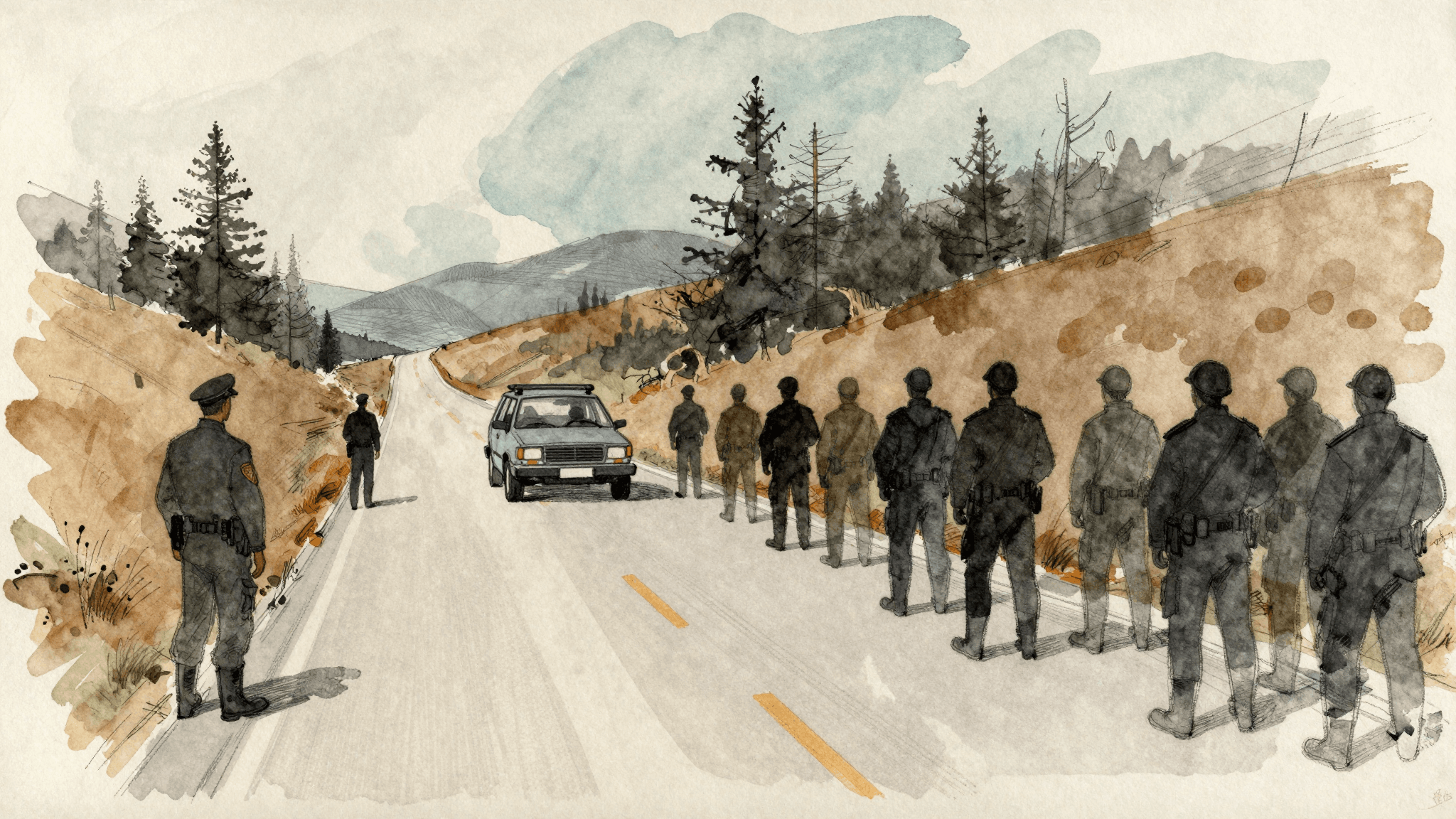
On July 22, 2026, An Garda Síochána—Ireland's national police force, commanded by a commissioner appointed by the Irish government—intercepted a vehicle on the N2 south of Carrickmacross (County Monaghan), near the Northern Ireland border.
The vehicle carried a device described as 'highly sophisticated,' containing military-grade explosives, a detonator, and a power unit.
The device was intended to be transported to Northern Ireland to carry out an attack. The seizure was based on intelligence.
The vehicle's driver, a woman in her twenties, was arrested on July 22, 2026, then charged on July 24. She was due to appear on the evening of July 24 at a special hearing before Trim District Court, northwest of Dublin.
A man in his forties, detained as part of the same investigation, remained in custody in the Dublin area on July 24, 2026.
Radicalization via the internet has been cited as a potential factor concerning the suspects.
Official Reactions
Justin Kelly, Garda Commissioner, described the seizure as 'extremely significant' and stated the device 'could have caused considerable damage.' He linked the suspects to dissident republicans—Irish republicans opposed to the 1998 peace agreements—and described a 'small minority' of radicalized republicans still active.
Jim O'Callaghan, Ireland's Minister for Justice, called the discovery 'concerning.' He viewed it as 'evidence that a threat persists linked to dissident republican activity.'
Michelle O'Neill, First Minister of Northern Ireland and prominent Sinn Féin figure—a republican party historically linked to the Provisional IRA (Irish Republican Army)—condemned the plot on social media, asserting the plotters 'have no support and no vision' and seek to 'undermine peace.'
Emma Little-Pengelly, Deputy First Minister of Northern Ireland and member of the Democratic Unionist Party (DUP), a party supporting Northern Ireland's place within the United Kingdom, denounced a 'terrorist plot' she said is 'rejected by the whole population.'
Context: Thirty Years of Conflict and Persistent Dissidents
Northern Ireland experienced roughly thirty years of armed conflict—the 'Troubles'—pitting republicans (favoring reunification with the Republic of Ireland) against unionists (supporting continued membership in the United Kingdom). This conflict claimed over 3,500 lives.
The Good Friday Agreement, signed in 1998, ended the hostilities. It provided for the disarmament of paramilitary groups and the establishment of shared institutions between the two communities.
Dissident republicans rejected this treaty, viewing it as a betrayal of republican ideals and an acceptance of British domination. They reject the legitimacy of Northern Irish institutions and continue paramilitary activities.
Timeline
Topics
Related articles
Latest articles
The illustrations in this article are generated by artificial intelligence.
Comments
No comments yet. Be the first to react.