…
World
US military strikes cargo ship accused of trying to breach Iran port blockade
Herz — World Desk · · 30s summary · 3 min read
The essentials
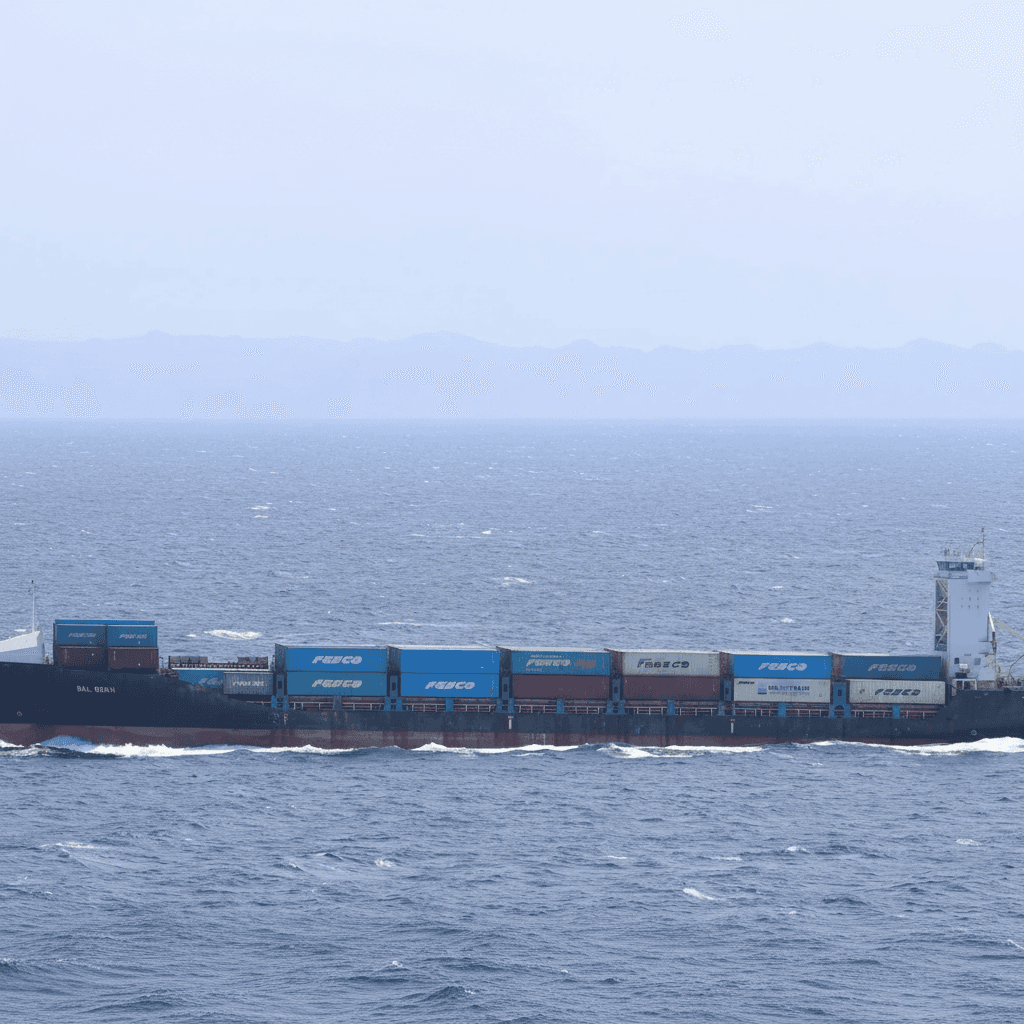
The US military attacked the Vela Nova on Tuesday, saying the Panama-flagged cargo ship had ignored repeated warnings while attempting to breach the blockade of Iranian ports in the Gulf of Oman. According to CENTCOM, a US Navy helicopter fired two Hellfire missiles at the engine room and disabled the vessel’s steering system. No information was released about possible crew casualties. The strike came during a period of relative calm following a 13-day escalation in July, as the United States reinstated its naval blockade and Iran reasserted control over the Strait of Hormuz.
- Two Hellfire missiles struck the Vela Nova’s engine room.
- The cargo ship was sailing under the Panamanian flag.
- CENTCOM said the vessel’s steering system was disabled.
- No information was released about possible crew casualties.
- The United States reinstated its blockade of Iranian ports.
What is known
The US military attacked a vessel in the Gulf of Oman on Tuesday, August 11, saying it was attempting to breach the US blockade of Iranian ports, according to Al Jazeera.
US Central Command, or CENTCOM, said a US Navy helicopter targeted the Vela Nova. The Panama-flagged cargo ship had allegedly ignored several warnings from US forces.
The helicopter fired two Hellfire guided missiles at the ship’s engine room, according to CENTCOM. Hellfire missiles can be used against vehicles and buildings.
CENTCOM said the strike disabled the Vela Nova’s steering system. It did not say whether any crew members were injured.
The US naval blockade
CENTCOM said US forces had disabled 55 commercial vessels during the blockade. It also reported disabling three vessels it described as “non-compliant” and boarding two ships.
55
commercial vessels disabled during the blockade, according to CENTCOM
3
vessels described as “non-compliant” and disabled
2
vessels boarded
The United States reinstated its naval blockade of Iranian ports when fighting recently resumed. Iran, meanwhile, again asserted control over the Strait of Hormuz.
A weakened ceasefire
The strike occurred during a period of relative calm in the war waged by the United States and Israel against Iran. Attacks have largely been suspended since a 13-day escalation in July.
The ceasefire envisaged under a memorandum of understanding signed in June appeared to have collapsed before the latest fighting. Such a memorandum records a shared course of action between its signatories.
The June memorandum had lifted both the US blockade and Iran’s control of the Strait of Hormuz. It was intended to revive negotiations over peace, sanctions on Iran and the country’s nuclear program.
Efforts to restore an agreement had made little progress. On Monday, Donald Trump demanded that Iran pay reparations for “50 years” of damage.
Tehran wanted reconstruction funding included in any agreement. The June memorandum contained a preliminary proposal for a $300 billion fund.
The Hormuz and Bab el-Mandeb straits
Before the war launched by the United States and Israel on February 28, 20% of global seaborne fossil-fuel trade passed through the Strait of Hormuz.
Topics
Source
Related articles
Latest articles
The illustrations in this article are generated by artificial intelligence.
Comments
No comments yet. Be the first to react.