…
World
Spain warns solar eclipse crowds could raise wildfire risk on Wednesday
Herz — World Desk · · 30s summary · 2 min read
The essentials
Spain is preparing for a heightened wildfire risk on Wednesday as hundreds of thousands of people head to hills and beaches to watch the total solar eclipse. Police expect about 1.5 million additional car journeys, while 460,000 foreign visitors are forecast to travel specifically for the event. Vegetation is extremely dry after persistent heat and low rainfall. Parking near dry vegetation, barbecues and fireworks are banned, and Valencia has closed its natural parks. Hospitals are also on alert for eye injuries caused by viewing the Sun without suitable protective glasses.
- About 1.5 million additional car journeys are expected on Wednesday.
- Parking near dry vegetation, barbecues and fireworks are banned.
- Valencia has closed its natural parks and rural walking trails.
- Hospitals are preparing for possible eclipse-related eye injuries.
What authorities know
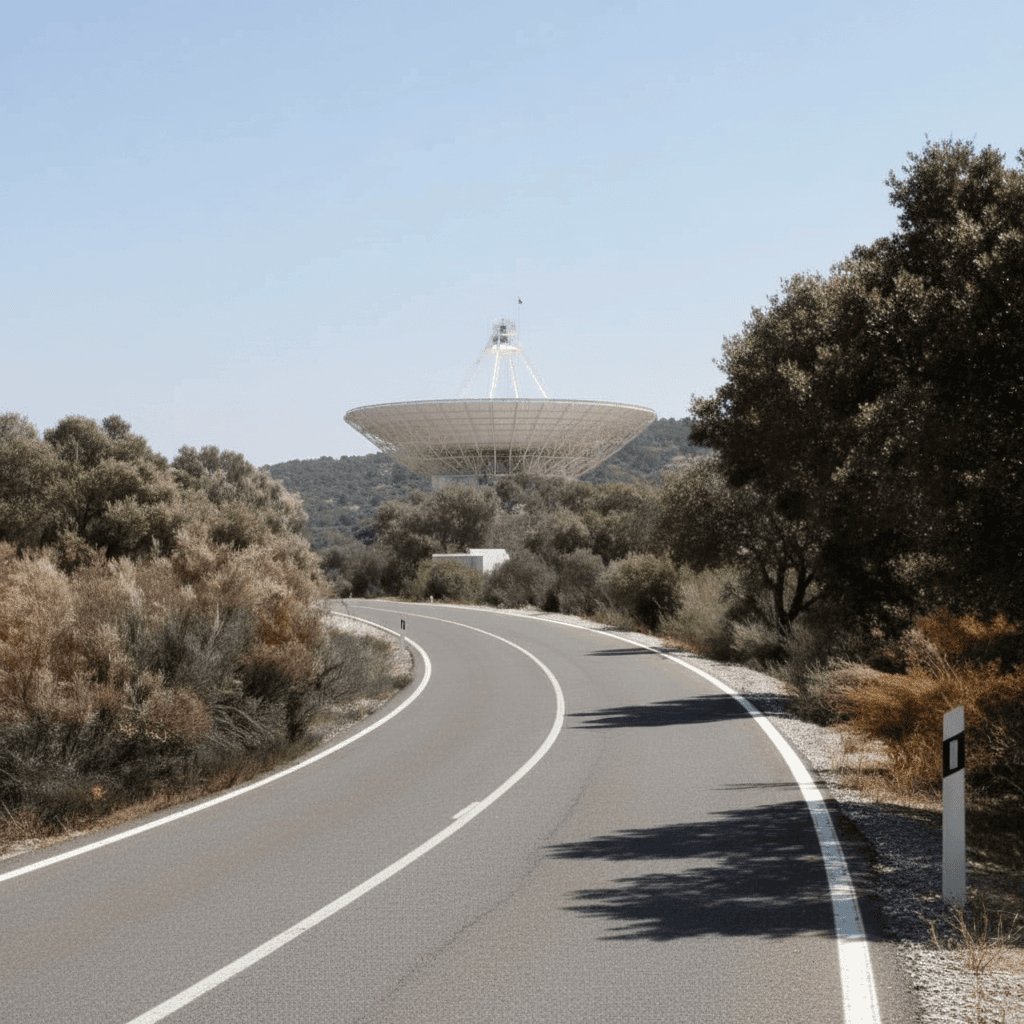
Spanish authorities warn that the crowds expected in hills and on beaches on Wednesday for the total solar eclipse will increase the risk of wildfires, The Guardian reports.
Spain’s environment minister, Sara Aagesen, said in Niebla that vegetation was extremely dry and that a single spark or careless act could trigger devastating forest fires.
Persistent heat and low rainfall have created conditions favourable to fires across large parts of Spain in recent weeks, including a major blaze west of Madrid.
An estimated 1.5 million extra journeys
Police estimate that about 1.5 million additional car journeys will be made on Wednesday. Officials fear congestion could prevent emergency vehicles from reaching rural areas if a fire breaks out.
Spain’s finance ministry also expects 460,000 foreign tourists to visit the country specifically to watch the eclipse.
Accommodation in small towns and villages along the eclipse path has been fully booked for months, as have makeshift observatories set up by local enthusiasts.
Restrictions intended to prevent fires
Parking on hard shoulders or near dry vegetation is prohibited. Authorities have also banned barbecues and fireworks.
As a precaution, the Valencia region has closed its natural parks and banned walking on rural trails.
A record-hot and record-dry July
On Monday, Spain’s national weather agency AEMET, which is responsible for meteorological observations and forecasts, published its July assessment.
July tied the record for the hottest month ever measured in mainland Spain since records began in 1961.
It was also the driest July ever recorded there, with 4.3 mm of rain, equivalent to 26% of the normal amount.
Human-caused climate change increases both the likelihood of wildfires and the area they burn in southern Europe.
A viewing corridor about 200 kilometres wide
The total eclipse will cross Spain. The best viewing conditions are expected within a corridor about 200 kilometres wide, running from A Coruña on the north-west Atlantic coast to Mallorca in the Mediterranean.
Hospitals alert to possible eye injuries
Spanish hospitals are on alert for possible eye injuries among people who watch the eclipse without suitable protection. Protective glasses are being distributed free of charge across the country.
Six brands of protective glasses were withdrawn after FACUA, a Spanish consumer advocacy organisation, judged them dangerous.
Jesús Meray, director of the Fernández-Vega ophthalmological research institute, recommends wearing protective glasses before, during and after the eclipse.
He warns that looking directly at the Sun can cause irreversible damage.
Topics
Source
Related articles
Latest articles
The illustrations in this article are generated by artificial intelligence.
Comments
No comments yet. Be the first to react.