…
World
Oil holds gains as fresh US-Iran attacks and Kazakh export risks support prices
Herz — World Desk · · 30s summary · 1 min read
The essentials
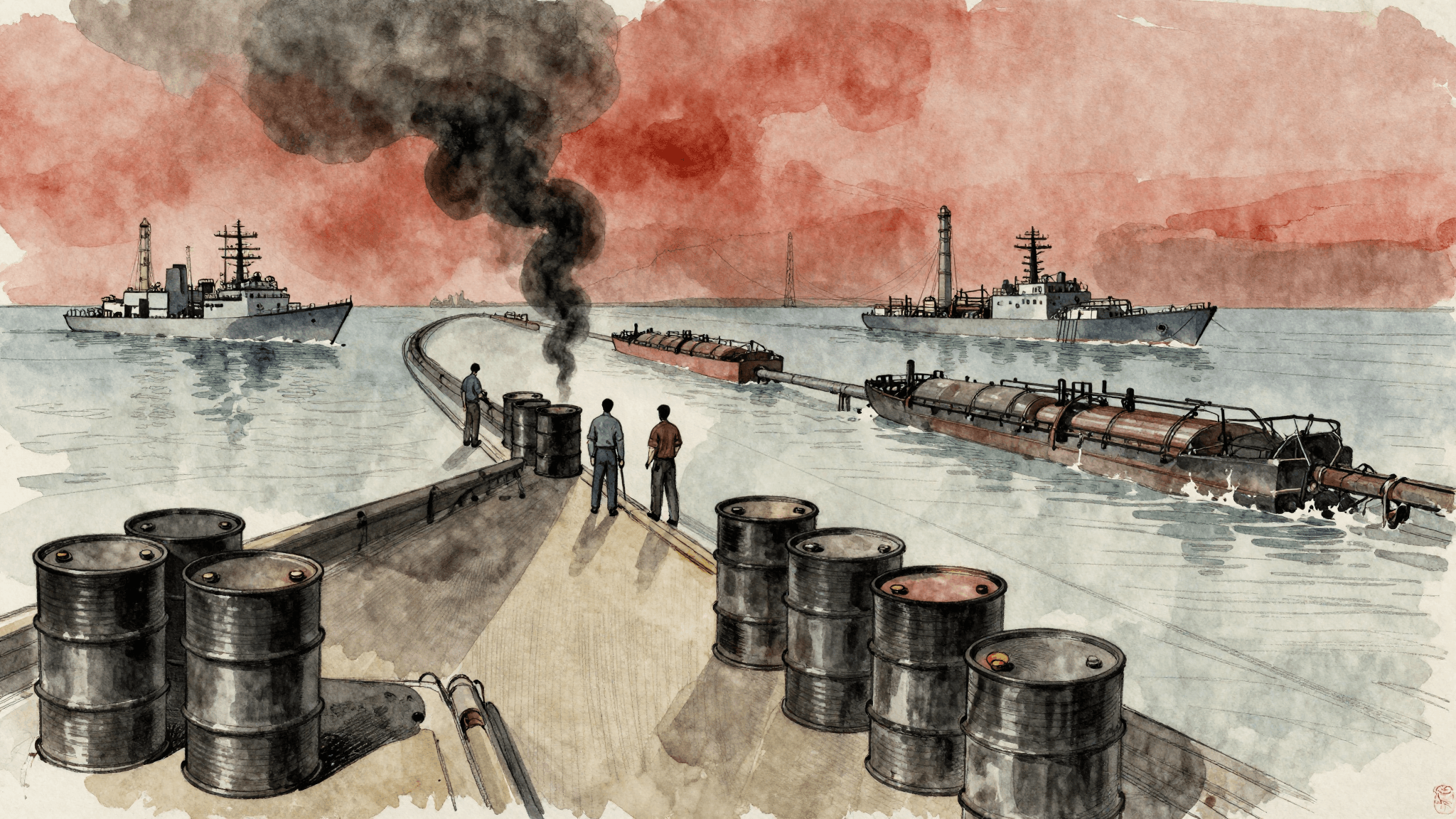
Oil is holding its gains as fresh attacks between the United States and Iran and risks to Kazakh exports support the market, Bloomberg reports. Energy markets have faced another volatile period this month, with fighting resuming after a brief pause in hostilities. The conflict is also spreading beyond the Strait of Hormuz: rebels in Yemen are threatening to block Saudi Arabia in the Red Sea, while Riyadh’s forces have joined the United States in striking Iran-backed militant targets in Iraq.
- Oil is holding its gains amid fresh US-Iran attacks.
- Fighting resumed after a brief pause in hostilities this month.
- Risks to Kazakh exports are also supporting the market.
- The conflict is spreading toward the Red Sea and Iraq.
What we know
Oil is holding its gains as fresh attacks between the United States and Iran support the market, Bloomberg reports.
Risks to Kazakh exports are also providing support.
Energy markets have experienced another period of volatility this month.
A brief pause in hostilities between Iran and the United States was followed by renewed fighting.
The conflict widens
The conflict is spreading beyond the Strait of Hormuz. Rebels in Yemen are threatening to block Saudi Arabia in the Red Sea.
Riyadh’s forces have joined the United States in striking targets in Iraq.
The targets are linked to militants backed by Tehran.
Energy market analysis
Paul Sankey, founder of Sankey Research, examines the escalation involving rebels in Yemen and Saudi Arabia.
His analysis also considers the escalation’s effects on energy markets.
What remains uncertain
The fact sheet does not specify the scale of the risk to Kazakh exports or quantify its effect on oil prices.
It provides no verified definition of the rebel group named by the source. This article therefore uses the general description “rebels in Yemen.”
Frequently asked questions
Why is oil holding its gains?
Fresh attacks between the United States and Iran and risks to Kazakh exports are supporting the market.
Was there a pause in hostilities?
Yes. A brief pause this month was followed by renewed fighting.
Where is the conflict spreading?
It is extending beyond the Strait of Hormuz, including toward the Red Sea and Iraq.
What operations took place in Iraq?
Riyadh’s forces and the United States struck targets linked to militants backed by Tehran.
Topics
Related articles
Latest articles
The illustrations in this article are generated by artificial intelligence.
Comments
No comments yet. Be the first to react.