…
World
Liberia: Young Liberians preserve history and culture through TikTok and digital archives
Herz — World Desk · · 30s summary · 2 min read
The essentials
In Liberia, a new generation is using TikTok, Facebook, YouTube, podcasts, and online archives to document and share the country's history and culture, including with the diaspora. This movement responds to a profound rupture: the two civil wars from 1989 to 2003, which killed approximately 250,000 people, broke the chain of transmission that had been maintained for centuries by elders. Initiatives like Archive Liberia, founded by Bilphena Decontee Yahwon, exemplify this effort to rebuild historical memory. Liberian experts see this as an evolution of oral tradition, not as a loss.
- Young Liberians document their history on TikTok, YouTube, Facebook, and podcasts.
- The 1989–2003 civil wars killed approximately 250,000 people and disrupted memory transmission.
- Archive Liberia, founded by Bilphena Yahwon, connects research, archives, and public storytelling.
- 46.7% of urban Liberians are internal migrants, according to a 2022 report.
- Experts view digital platforms as a natural continuation of oral tradition.
What We Know
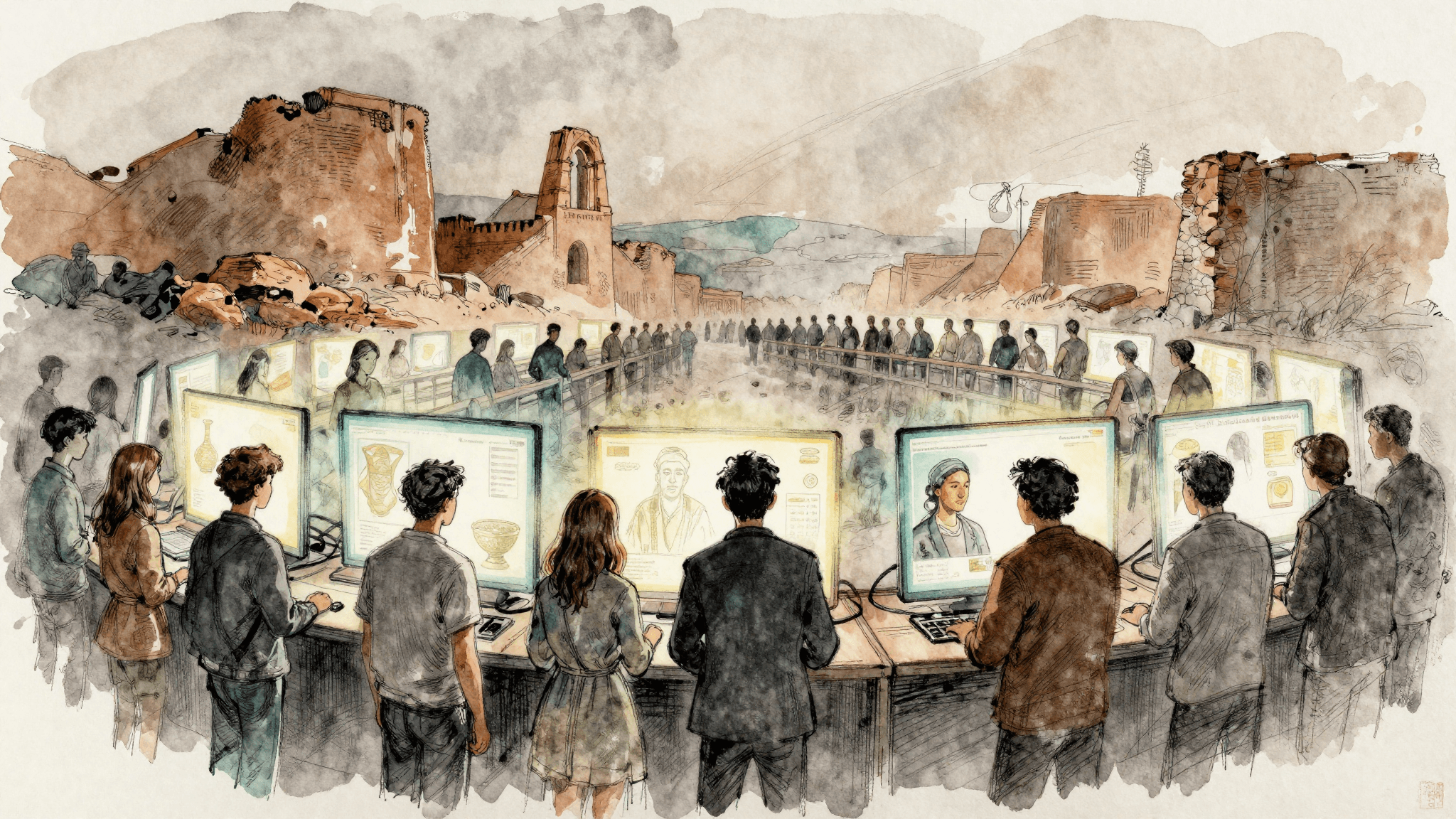
In Liberia, a generation of young adults is using TikTok, Facebook, YouTube, podcasts, and online archives to document and share Liberian history and culture.
These contents also circulate among the Liberian diaspora abroad, according to Al Jazeera.
Among the most visible initiatives is Archive Liberia, founded by Bilphena Decontee Yahwon. This memory and civic education project explores the country's history through research, archives, and public storytelling.
Context: A Chain of Memory Broken by Civil War
For centuries, Liberian memory was transmitted orally by the elders of each community. Liberia never adopted the formal griot tradition—the specialized bards who recite historical narratives found in West Africa—as it exists in the Sahel.
Liberian elders nonetheless played an analogous role: they transmitted, on an unpaid basis, family stories, cultural traditions, and communal memory.
This chain perpetuated unbroken for centuries, according to Liberian historian and author Patrick Burrowes. The two civil wars, from 1989 to 2003, broke it: they killed approximately 250,000 people and displaced hundreds of thousands of others.
Internal migration further exacerbates this fragmentation. According to a 2022 report by the Liberia Institute for Statistics and Geo-Information Services, internal migrants account for 46.7% of Liberia's urban population compared to 13.6% of the rural population.
Urban population46.7
Rural population13.6
A Digital Shift Viewed as Evolution, Not Rupture
Zuleka Dauda, program director at the Center for Integrated Solutions—a Liberian research and strategic planning organization—presents this digital shift as a natural evolution of oral tradition, not as a loss.
Topics
Related articles



Latest articles


The illustrations in this article are generated by artificial intelligence.
Comments
No comments yet. Be the first to react.