…
World
Lebanon: Military deploys to Zaoutar El-Gharbiyé, first Hezbollah disarmament 'pilot zone'
Herz — World Desk · · 30s summary · 3 min read
The essentials
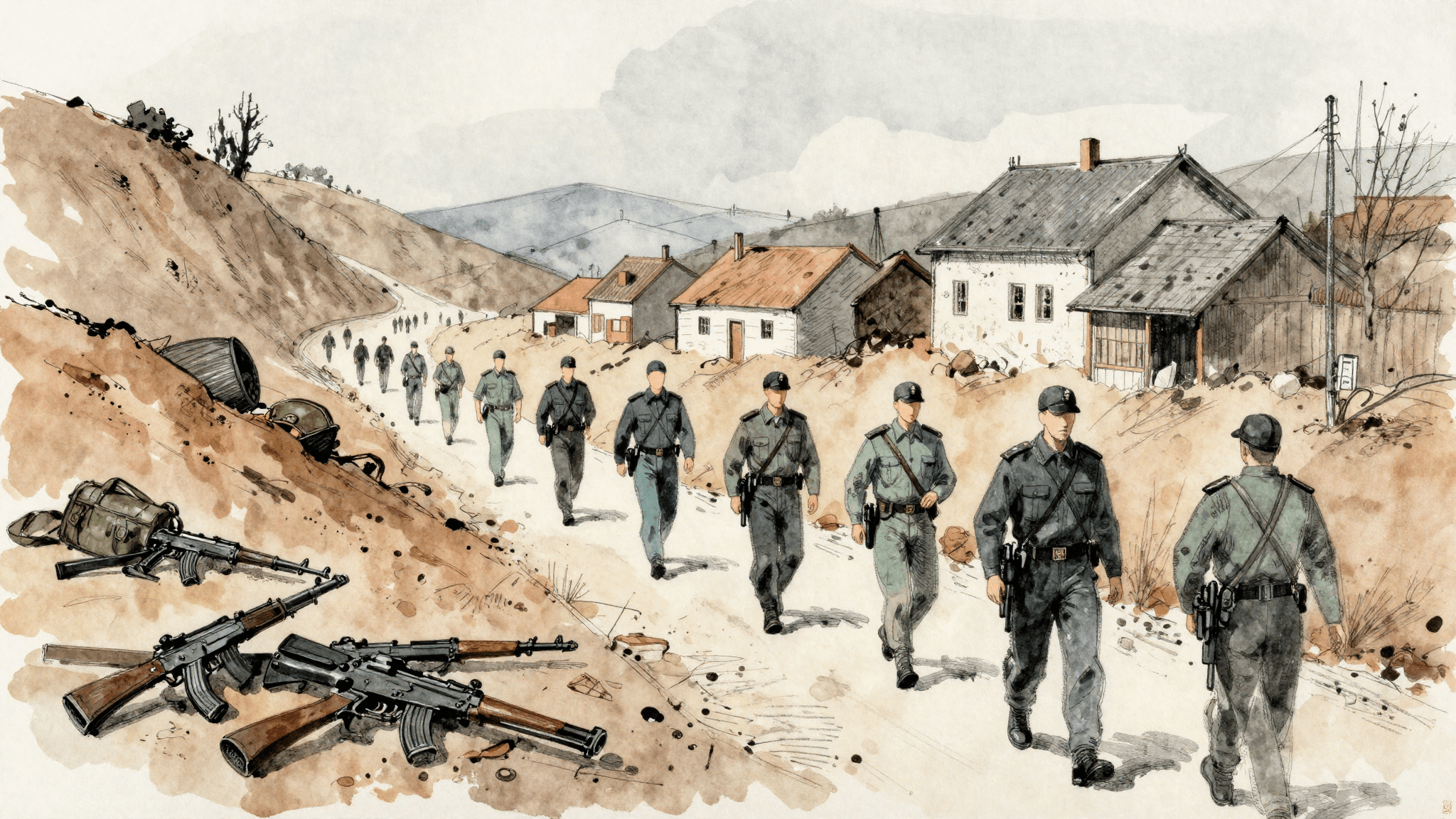
The Lebanese Army deployed on July 30, 2026 to Zaoutar El-Gharbiyé, a village in southern Lebanon, according to Le Monde. This village is among the first 'pilot zones' under a U.S.-backed ceasefire agreement: areas where Hezbollah must be disarmed as a priority and cease all security operations. Residents report that Israeli forces 'destroyed everything to make life impossible' in the village during their occupation. The deployment marks a key milestone in implementing the November 2024 ceasefire agreement.
- The Lebanese Army deployed on July 30, 2026 to Zaoutar El-Gharbiyé.
- The village is one of the first pilot zones for Hezbollah disarmament under a U.S.-backed agreement.
- Residents describe the village as entirely destroyed by Israeli forces.
- This mechanism is part of the November 2024 Israeli-Lebanese ceasefire agreement.
What we know
The Lebanese Army deployed on July 30, 2026 to Zaoutar El-Gharbiyé, a village in southern Lebanon located north of the Litani River and adjacent to territory still occupied by Israel, according to Le Monde.
This village has been designated as one of the first 'pilot zones' under a ceasefire agreement sponsored by Washington. These zones are priority geographic areas in southern Lebanon where Hezbollah—a political party and Lebanese Shiite Islamist paramilitary group—must be disarmed first and cease all security operations, before the mechanism may eventually extend to other territories.
Residents of Zaoutar El-Gharbiyé testify that Israeli forces 'destroyed everything to make life impossible' in the village.
Context
UN Security Council Resolution 1701, unanimously adopted on August 11, 2006, ended the 34-day Israeli-Lebanese war. It required Hezbollah's withdrawal north of the Litani River and deployment of the Lebanese Army in southern Lebanon. These obligations remained partially unenforced for nearly twenty years due to Hezbollah's persistent presence.
A ceasefire agreement between Israel and Lebanon, sponsored by the United States and France, took effect on November 27, 2024. It provides for Israel's gradual withdrawal from southern Lebanon and deployment of the Lebanese Army south of the Litani River. Israeli withdrawal deadlines have been extended multiple times.
To unlock implementation of the agreement, Washington established the 'pilot zones' mechanism, enabling progressive and verifiable Hezbollah disarmament, locality by locality. Zaoutar El-Gharbiyé is among the first to receive this designation.
Timeline
- August 11, 2006Adoption of UN Resolution 1701: it ends the 34-day Israeli-Lebanese war and mandates Hezbollah's withdrawal north of the Litani River.
- October 8, 2023Hezbollah opens a support front for Gaza, triggering a cross-border war of attrition with Israel that displaces tens of thousands of civilians.
- September–October 2024Major escalation: Israel strikes Lebanon heavily and launches a ground operation in the south. Hezbollah leader Hassan Nasrallah is killed on September 27, 2024. Southern Lebanon, including Zaoutar El-Gharbiyé, suffers massive destruction.
Topics
Related articles
Latest articles
The illustrations in this article are generated by artificial intelligence.
Comments
No comments yet. Be the first to react.