…
World
Iran launches missiles at Gulf states and closes Strait of Hormuz after ~140 US strikes
Herz — World Desk · · 30s summary · 3 min read
The essentials
Iran launched missiles and drones against several Gulf nations on July 12, 2026, in retaliation for approximately 140 US strikes conducted overnight. Tehran simultaneously announced the closure of the Strait of Hormuz "until further notice." Merchant ships were attacked in the passage, with one abandoned in flames by its crew. Kuwait, the United Arab Emirates, Qatar, and Bahrain all reported attacks or air-raid alerts. These events occur amid a theoretically active ceasefire between the US, Israel, and Iran.
- Iran launched missiles and drones targeting Kuwait, UAE, Qatar, and Bahrain on July 12, 2026
- Strait of Hormuz closed "until further notice" by Tehran following US military action
- Approximately 140 US strikes against Iranian military targets during night of July 11-12
- Merchant vessel attacked in Strait of Hormuz, crew abandoned burning ship
- Ceasefire between US, Israel, and Iran destabilized by latest military exchanges
What we know
Iran launched missiles and drones against several Gulf nations on July 12, 2026, according to France Info, in retaliation for approximately 140 strikes conducted by US Central Command (CENTCOM) — the command structure of the US Department of Defense responsible for military operations in the Middle East — during the night of July 11-12.
Kuwait and the United Arab Emirates reported facing airborne attacks. In Qatar, explosions were heard and interceptions occurred in the sky south of Doha; Qatari authorities confirmed they intercepted missiles. Air-raid sirens were activated in Bahrain.
Simultaneously, Iran announced the closure of the Strait of Hormuz "until further notice."
Incidents in the Strait of Hormuz
The Islamic Revolutionary Guard Corps (IRGC) — Iran's paramilitary organization answerable directly to Iran's Supreme Leader — declared that multiple vessels had attempted to traverse an unauthorized route and ignored their warnings.
A first vessel, whose identification systems allegedly had been disabled, was struck by warning fire and halted in the strait. A second, accused of "violating regulations," was also struck.
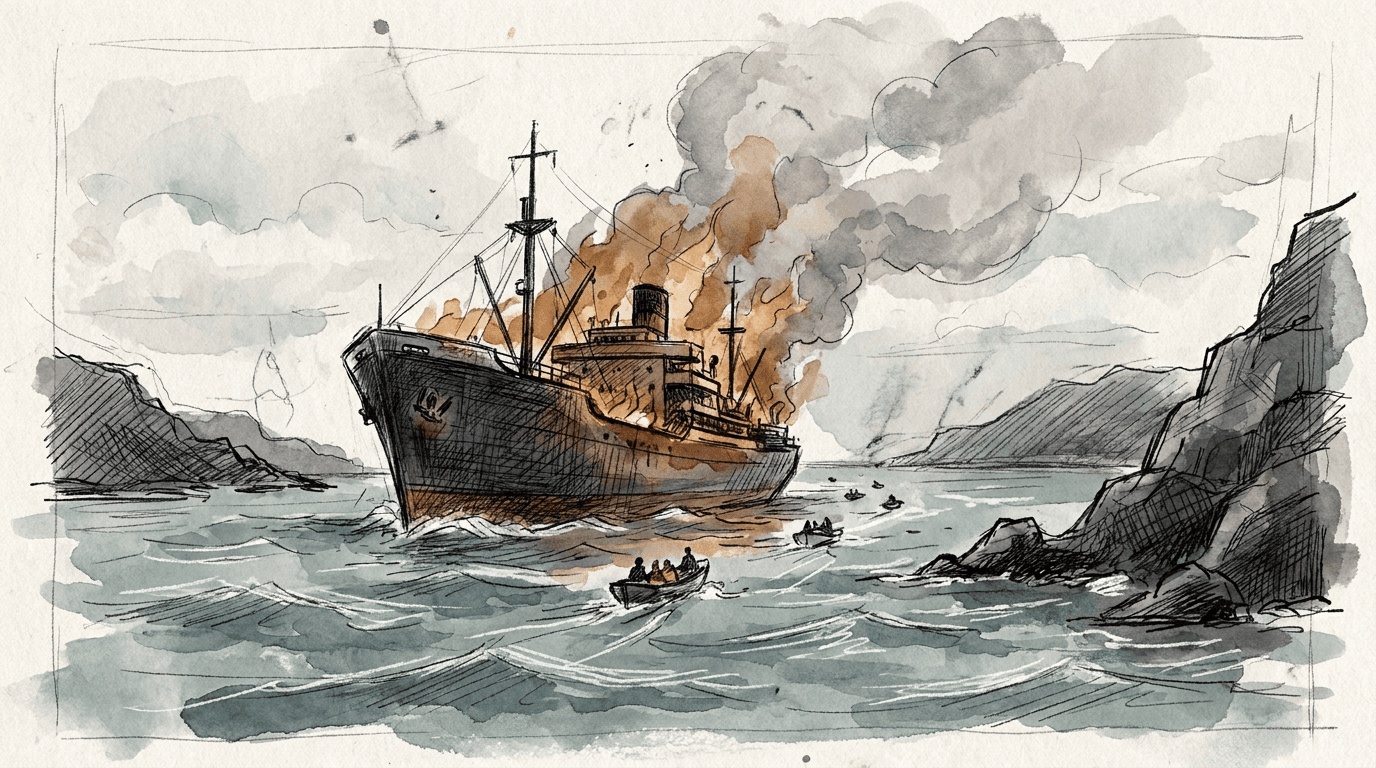
A merchant ship was attacked in the Strait of Hormuz; its crew abandoned it in flames.
US strikes
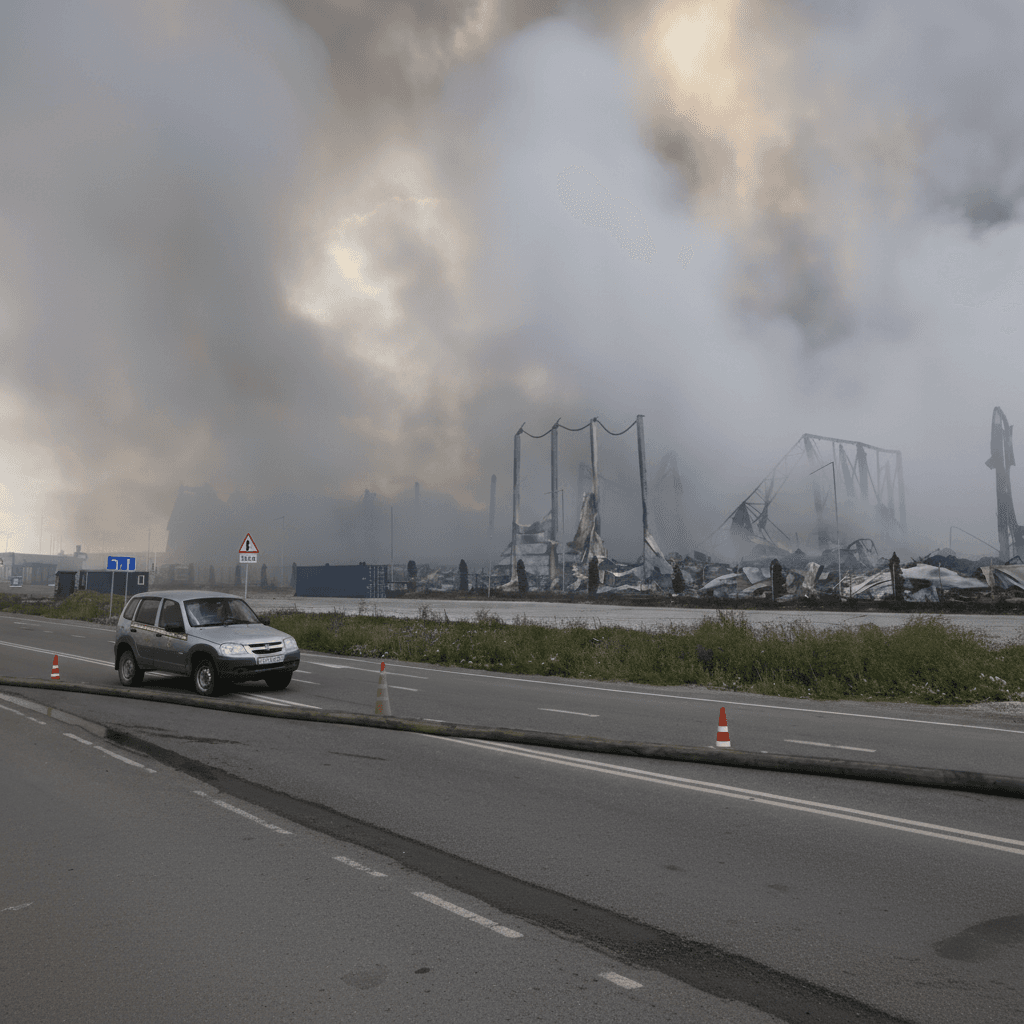
During the night of July 11-12, 2026, CENTCOM conducted approximately 140 strikes against Iranian military targets. This marks the third series of strikes since Tuesday.
Targets included missile and drone sites, naval assets, ammunition depots, communication networks, and coastal surveillance posts.
Additionally, Iranian media reported explosions in several locations in southern Iran: Bandar Abbas, Sirik, Jask, Qeshm Island, and Khuzestan Province, which borders Iraq. No casualties were reported immediately.
Iran made a bad choice. Now they're paying.
— Pete Hegseth, US Secretary of Defense, July 12, 2026
Context
These events occur within a context of a theoretically active ceasefire between the US, Israel, and Iran. In the days preceding July 12, 2026, both sides had exchanged threats of retaliation and total destruction.
Timeline
- Since Tuesday (before July 12, 2026)CENTCOM conducts first two series of strikes against Iran; the night of July 11-12 constitutes the third.
Related articles


Latest articles



The illustrations in this article are generated by artificial intelligence.
Comments
No comments yet. Be the first to react.