…
World
India's Education Minister Resigns Amid Student Protests
Herz — World Desk · · 30s summary · 2 min read
The essentials
India's Education Minister resigned on July 25, 2026, during nationwide student demonstrations. Rather than turning to violence, young protesters embraced peaceful, festive forms of action—laughter, dance, and singing. In an opinion piece published on July 31, 2026, French political scientist Christophe Jaffrelot analyzes these mobilizations as revealing a profound social crisis in India, with political outcomes still uncertain.
- India's Education Minister resigned on July 25, 2026
- Student protesters chose peaceful and festive methods of demonstration
- Christophe Jaffrelot views the movement as revealing a deeper social crisis
- The political outcome remains uncertain
What We Know
India's Education Minister resigned on July 25, 2026, amid student-led demonstrations across the country, according to Le Monde.
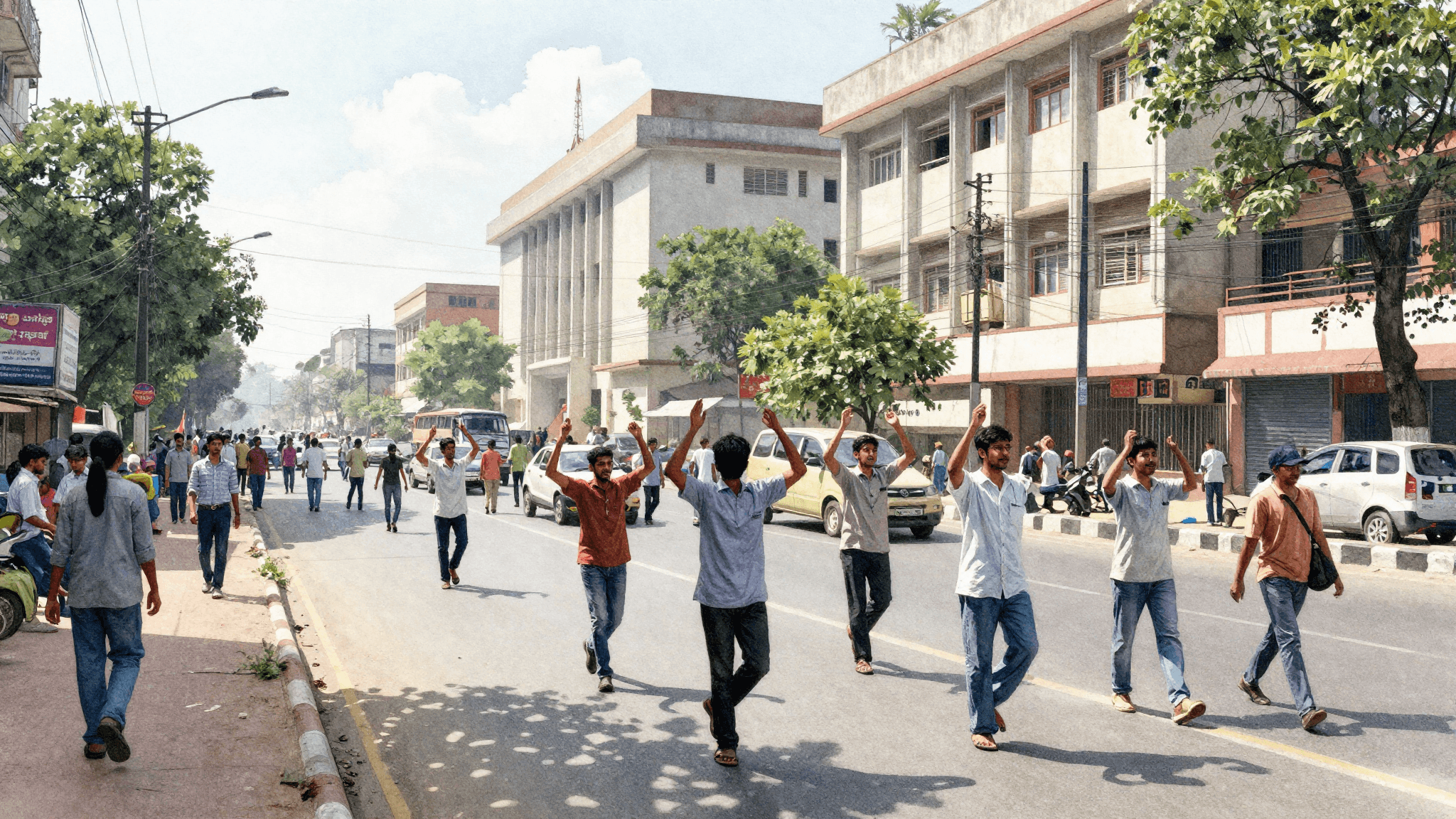
Young protesters opted for peaceful and festive forms of action: laughter, dance, and singing, eschewing violence entirely.
In an opinion piece published on July 31, 2026, French political scientist Christophe Jaffrelot—a professor at the Centre for International Research (CERI) at Sciences Po Paris and research director at France's National Centre for Scientific Research (CNRS)—analyzes these mobilizations as revealing a deep social crisis in India with uncertain political outcomes.
Context: A Long Tradition of Student Mobilization in India
Indian university campuses have a rich history of political contestation. In February 2016, the arrest of student Kanhaiya Kumar at Jawaharlal Nehru University (JNU) in New Delhi on sedition charges triggered a nationwide student solidarity movement and reignited debate over academic freedoms.
Between December 2019 and March 2020, a protest movement challenged the Citizenship Amendment Act (CAA) and the threat of a National Register of Citizens (NRC). University campuses played a central role in this mobilization.
Timeline
- February 2016Arrest of student Kanhaiya Kumar at Jawaharlal Nehru University (JNU) in New Delhi on sedition charges, triggering a nationwide student solidarity movement and intense public debate over academic freedoms in India.
- December 2019 – March 2020Large-scale student and civil protest movement against the Citizenship Amendment Act (CAA) and the threat of a National Register of Citizens (NRC), marking one of the largest opposition movements under the Narendra Modi government, with strong university campus mobilization.
- July 25, 2026India's Education Minister resigns amid ongoing student mobilizations, marking a direct political consequence of the movement.
- July 31, 2026Christophe Jaffrelot publishes an opinion piece analyzing the movement as revealing a deep social crisis with uncertain political outcomes.
Topics
Related articles



Latest articles


The illustrations in this article are generated by artificial intelligence.
Comments
No comments yet. Be the first to react.