…
World
Google unveils four Pixel 11 phones, Pixel Watch 5 and Pixel Tag
Herz — World Desk · · 30s summary · 4 min read
The essentials
Google unveiled four Pixel 11 smartphones, the Pixel Watch 5 and the Pixel Tag Bluetooth tracker on August 12, 2026. Preorders opened that day, with phones and watches due to go on sale or ship from August 20. The 256GB Pixel 11 starts at $899, while every phone costs $100 more than its Pixel 10 equivalent. The lineup adds the Tensor G6 processor, faster computational photography, magnetic wireless charging and Android 17. Google also announced camera, battery and durability changes across the standard, Pro and foldable models.
- Google unveiled four Pixel 11 smartphones on August 12, 2026.
- Sales or shipments of the phones and watches begin August 20.
- The Pixel 11 with 256GB of storage starts at $899.
- Each phone costs $100 more than its Pixel 10 equivalent.
- Sources differ by $1 on the starting prices of the Pro models.
What Google announced
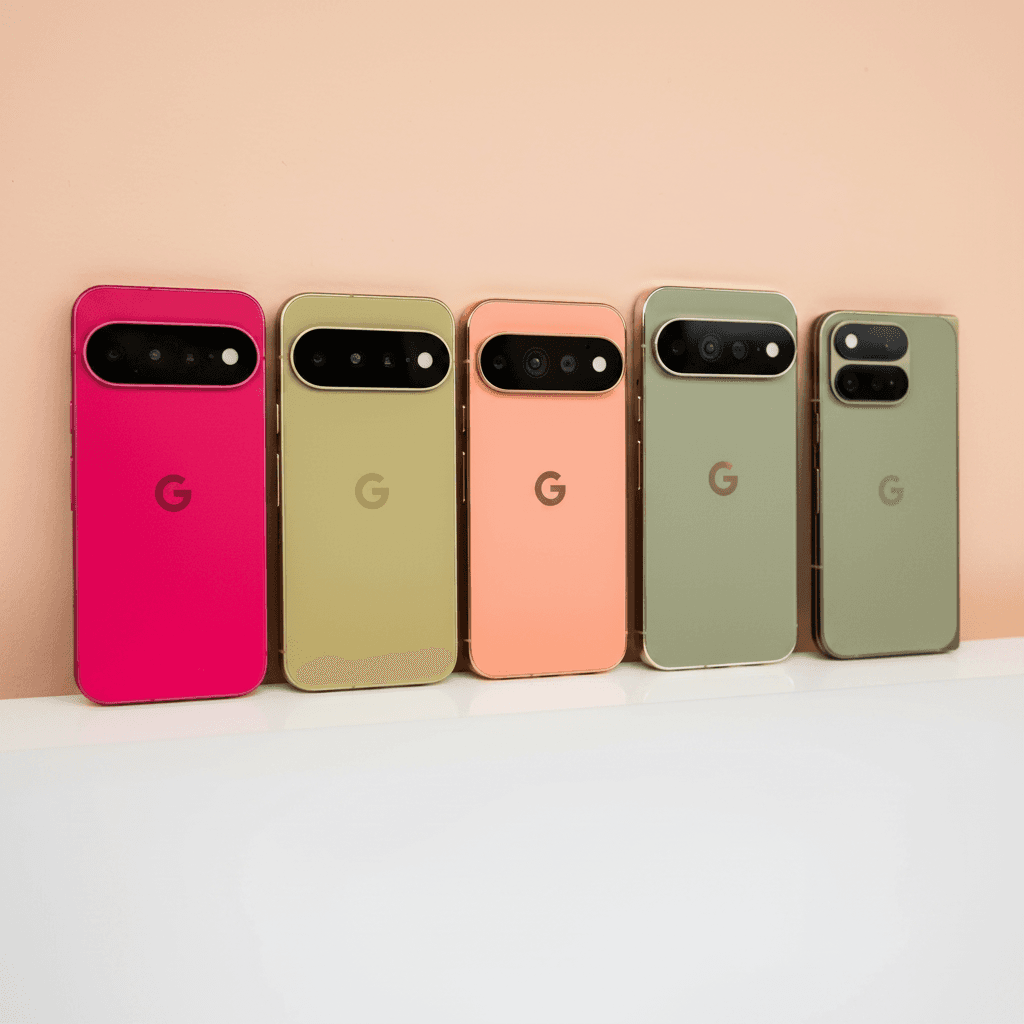
Google unveiled the Pixel 11, Pixel 11 Pro, Pixel 11 Pro XL and Pixel 11 Pro Fold on August 12, 2026. The Pixel Watch 5 and Pixel Tag Bluetooth tracker completed the announcements reported by Wired, Engadget and TechCrunch.
Preorders opened on the day of the presentation. The phones and watches are due to go on sale or ship from August 20, 2026.
Every Pixel 11 phone costs $100 more than its Pixel 10 equivalent. The Pixel 11 and Pixel 11 Pro offer at least 256GB of base storage.
The Pixel 11 with 256GB of storage starts at $899.
Engadget lists the Pixel 11 Pro and Pro XL at $1,099 and $1,299, respectively, while Wired gives rounded prices of $1,100 and $1,300. TechCrunch prices the Pro Fold at $1,899, compared with $1,900 in Wired.
Tensor G6 powers the entire lineup
Every Pixel 11 uses the Tensor G6 processor. Google claims it delivers up to 20% greater energy efficiency, 25% faster navigation and 15% faster app loading than the Tensor G5, with tensor processing units that are 50% more powerful.
Google says the processor accelerates computational photography, producing low-light images up to 4.5 times faster and enabling Pro Zoom of up to 120x.
According to Google, Gemini Nano runs with lower latency and better quality on the Pixel 11 lineup, including for live translations.
Pixel 11 display, battery and cameras
The Pixel 11 has a 6.3-inch OLED display with a resolution of 1,080 × 2,424 pixels and brightness of up to 3,000 nits. Its battery has a capacity of 4,985mAh, compared with 4,970mAh in the Pixel 10.
Its rear cameras include a 48-megapixel main sensor, a 13-megapixel ultrawide camera and a 10.8-megapixel telephoto camera. The telephoto provides 5x optical zoom, while digital zoom reaches 30x.
The main sensor grows from 1/2 inch to 1/1.56 inch. Google says it captures up to 56% more light, while its field of view increases from 82 to 85 degrees.
The camera bar now has edge-to-edge glass and a metal frame. Google says the Pixel 11 version is more than 40% thinner than before.
The Pixel 11 comes in Frost, Pistachio, Hibiscus and Obsidian. The foldable model is available in Olive and Obsidian.
Battery life and charging
Google claims more than 30 hours of battery life for the non-foldable models and 24 hours for the Pro Fold.
After 30 minutes of wired charging, Google says the Pixel 11 and Pro can reach 55%, the Pro XL 75% and the Pro Fold 50%.
All four phones support magnetic wireless charging through the Pixelsnap ecosystem. Google claims charging-speed gains of 25% for the Pixel 11, 29% for the Pro, 17% for the Pro XL and 20% for the Pro Fold.
The Pixel 11 and Pro Fold support 25W wireless charging. Every model runs Android 17 and carries an IP68 rating for protection against dust and water intrusion.
Topics
Source
Related articles
Latest articles
The illustrations in this article are generated by artificial intelligence.
Comments
No comments yet. Be the first to react.