…
World
Germany: Homeownership Remains Most Affordable Away From Major Cities
Herz — World Desk · · 30s summary · 2 min read
The essentials
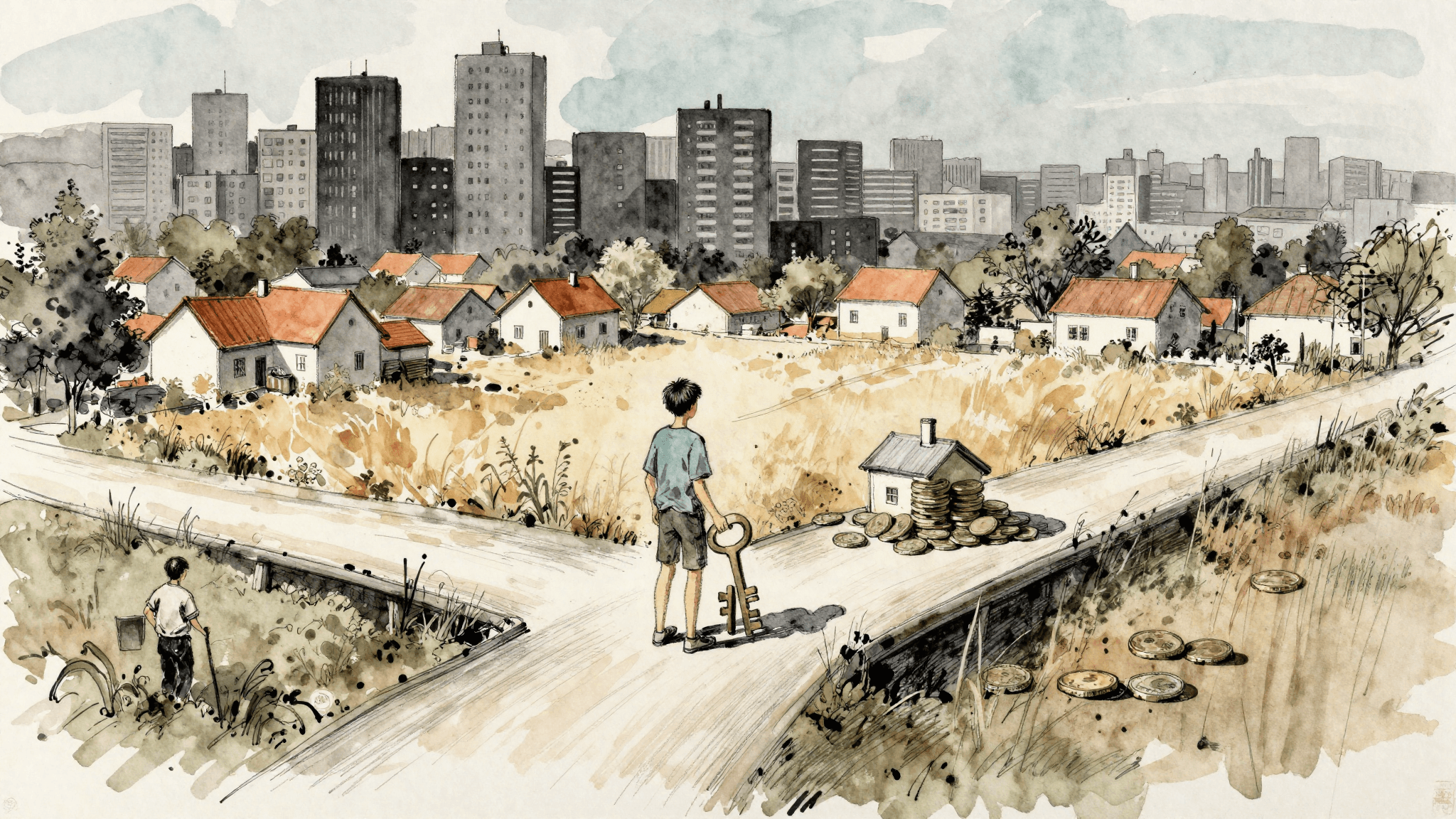
High mortgage rates and property prices are making homeownership difficult in Germany, particularly in major cities. An Empirica study commissioned by building society LBS nevertheless finds that some rural regions remain affordable. Based on a limit of 35% of net household income for monthly financing costs, around 39% of tenant households aged 30 to 44 could manage the payments. Initial savings are a much greater barrier: fewer than 6% could cover the deposit and additional purchase costs without assistance. The average required equity contribution is about €131,000, more than twice the 2010 level.
- Rural areas in eastern and northern Germany offer the best prospects for buyers.
- Around 39% of tenant households aged 30 to 44 could manage the monthly payments.
- Fewer than 6% have enough savings to cover the upfront costs without assistance.
- The average required equity contribution is about €131,000.
What the study found
In Germany, higher mortgage rates and elevated property prices are making homeownership particularly difficult for first-time buyers, according to Handelsblatt.
An Empirica study commissioned by building society LBS nevertheless concludes that some areas outside the country's major cities remain affordable for younger households.
The affordability barometer assessed all 400 German districts and independent cities. It classified financing as affordable when monthly payments did not exceed 35% of a household's net income.
Under that criterion, around 39% of tenant households aged 30 to 44 could afford the ongoing financing costs.
Rural eastern and northern regions lead
The strongest opportunities for homeownership are found in rural parts of eastern and northern Germany.
Mansfeld-Südharz and Kyffhäuserkreis are among the districts offering comparatively favourable conditions for prospective buyers.
In Munich, Frankfurt and Berlin, by contrast, the calculation puts homeownership beyond the financial reach of most households.
Upfront savings remain the bigger obstacle
Being able to meet the monthly payments is not enough. Fewer than 6% of younger tenant households could independently fund both the equity contribution and the additional costs associated with a purchase.
The average required equity contribution is about €131,000, more than twice the amount recorded in 2010. For readers outside the euro area, this figure is stated in euros and has not been converted because exchange rates fluctuate.
Higher ancillary purchase costs and property transfer taxes have added to the burden on buyers in Germany.
Property prices return to previous peaks
In many German regions, property prices have again reached the record levels seen in early 2022.
vdp Research also analysed neighbourhood-level price movements in 13 major German cities for Handelsblatt.
Luxury homes are also offered through prize draws
Dreamify has organised several prize draws each year since 2024, offering participants the chance to win a fully furnished luxury home.
A home on the German island of Amrum, valued at €1.9 million, is being offered until the end of August 2026 in the company's ninth draw.
Omaze has operated comparable house draws in the United Kingdom since 2020 and in Germany since 2025.
FAQ
What share of younger tenant households could afford the monthly payments?
Around 39% of German tenant households aged 30 to 44 meet the study's criterion, which limits monthly financing costs to 35% of net household income.
Topics
Related articles
Latest articles
The illustrations in this article are generated by artificial intelligence.
Comments
No comments yet. Be the first to react.