…
World
Fuel prices in Germany edge lower on July 27, 2026
Herz — World Desk · · 30s summary · 3 min read
The essentials
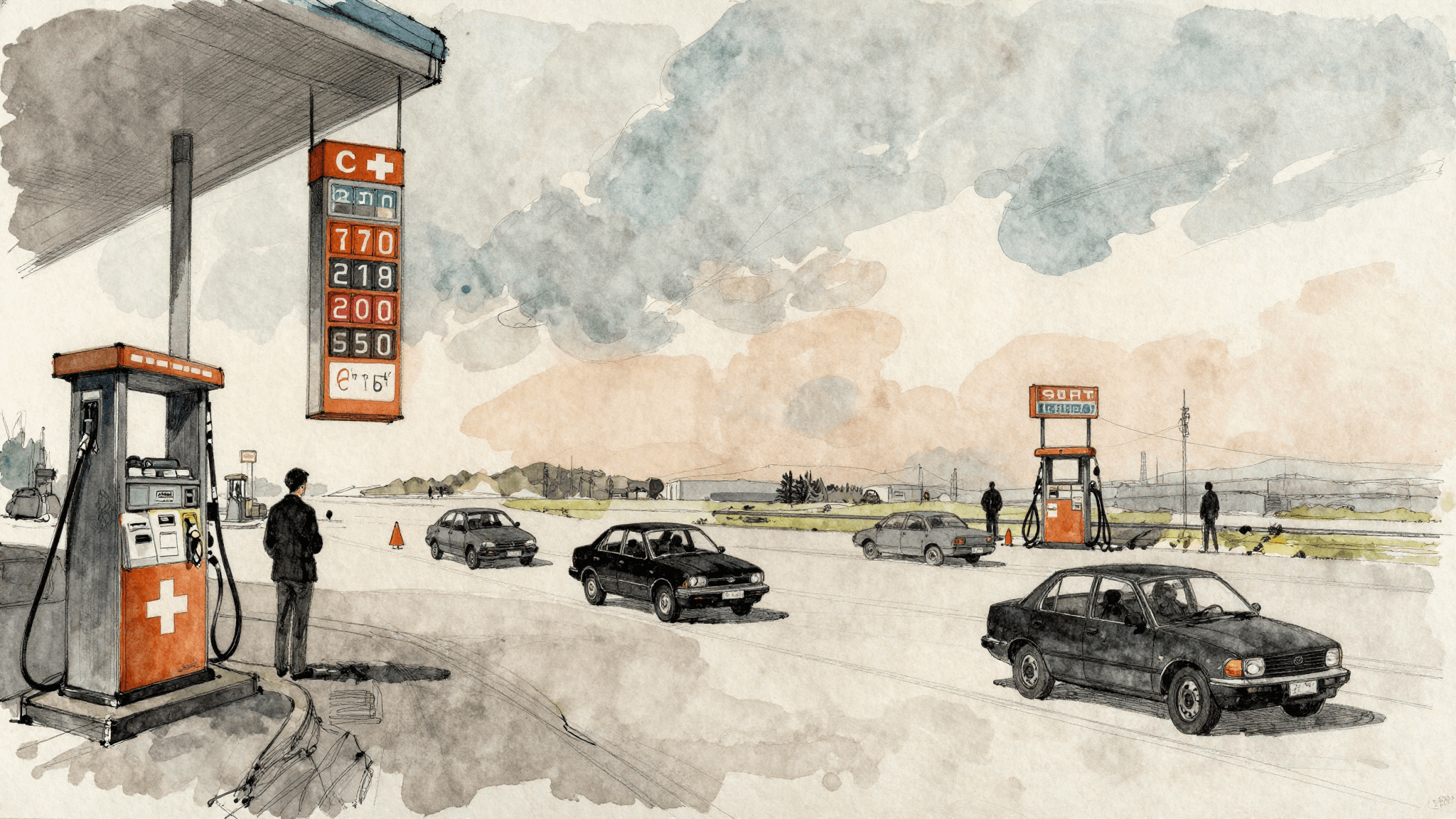
Fuel prices in Germany slipped slightly on July 27, 2026, according to ADAC and Tankerkönig. On Sunday, July 26, Super E10 averaged €2.157 per liter and diesel €2.21 per liter—roughly 1 cent less than the previous Thursday. This easing follows a sharp drop in Brent crude, Europe's benchmark, which had topped $100 per barrel just days earlier. Since the start of the Iran war, prices remain significantly higher than pre-conflict levels. The ADAC expects a "rapid and meaningful" pass-through of the crude decline to pump prices.
- Slight decline in pump prices confirmed July 27 by ADAC and Tankerkönig
- Super E10 at €2.157/liter and diesel at €2.21/liter on July 26
- Brent crude fell sharply after exceeding $100/barrel on July 24
- Since Iran war: +38 ct/liter (Super E10) and +46 ct/liter (diesel)
- ADAC deems prices too high for weeks and awaits meaningful pump relief
What we know
On the morning of Monday, July 27, 2026, fuel prices in Germany edged lower. Both the ADAC—Allgemeiner Deutscher Automobil-Club, Germany's largest motoring club—and Tankerkönig, a real-time fuel price comparison portal, confirmed this downward trend, which had begun over the weekend.
On Sunday, July 26, the national average stood at €2.157 per liter for Super E10—a gasoline blend containing up to 10% ethanol by volume and the cheapest fuel option at German filling stations—and €2.21 per liter for diesel. These prices represent approximately 1 cent less than the previous Thursday.
at an excessively high level for weeks now
— ADAC, on German fuel prices
The ADAC expects that the recent decline in crude oil will be passed through to pump prices "rapidly and meaningfully."
The numbers
€2.157/liter
Average price of Super E10 nationwide in Germany (July 26, 2026, ADAC)
€2.21/liter
Average price of diesel nationwide in Germany (July 26, 2026, ADAC)
+38 ct/liter
Super E10 price increase versus pre-Iran war level
+46 ct/liter
Diesel price increase versus pre-Iran war level
+€19 / +€23
Surcharge for a 50-liter fill-up (Super E10 / diesel) versus pre-war level
Super E1038
Topics
Related articles
Latest articles
The illustrations in this article are generated by artificial intelligence.
Comments
No comments yet. Be the first to react.