…
World
Friedrich Merz calls for massive cuts to the European Union’s next budget
Herz — World Desk · · 30s summary · 3 min read
The essentials
Friedrich Merz called on the European Union on Tuesday to cut several hundred billion euros from its 2028–2034 budget and accelerate economic reforms. According to Le Temps, the German leader made the demand in Dublin after meeting Irish Prime Minister Micheál Martin. The European Commission proposed a €2 trillion package last year, notably to fund defence, the green transition and competitiveness. Martin said Dublin would consider Germany’s concerns and seek compromises. He hopes an agreement can be reached by the end of the year. Merz is open to discussing new EU revenue sources but rules out a new corporate tax.
- Merz is seeking several hundred billion euros in cuts.
- The Commission has proposed a €2 trillion budget.
- Dublin says it will seek compromises with Germany.
- An agreement is expected to be possible by the end of the year.
- Merz rules out a new EU corporate tax.
What we know
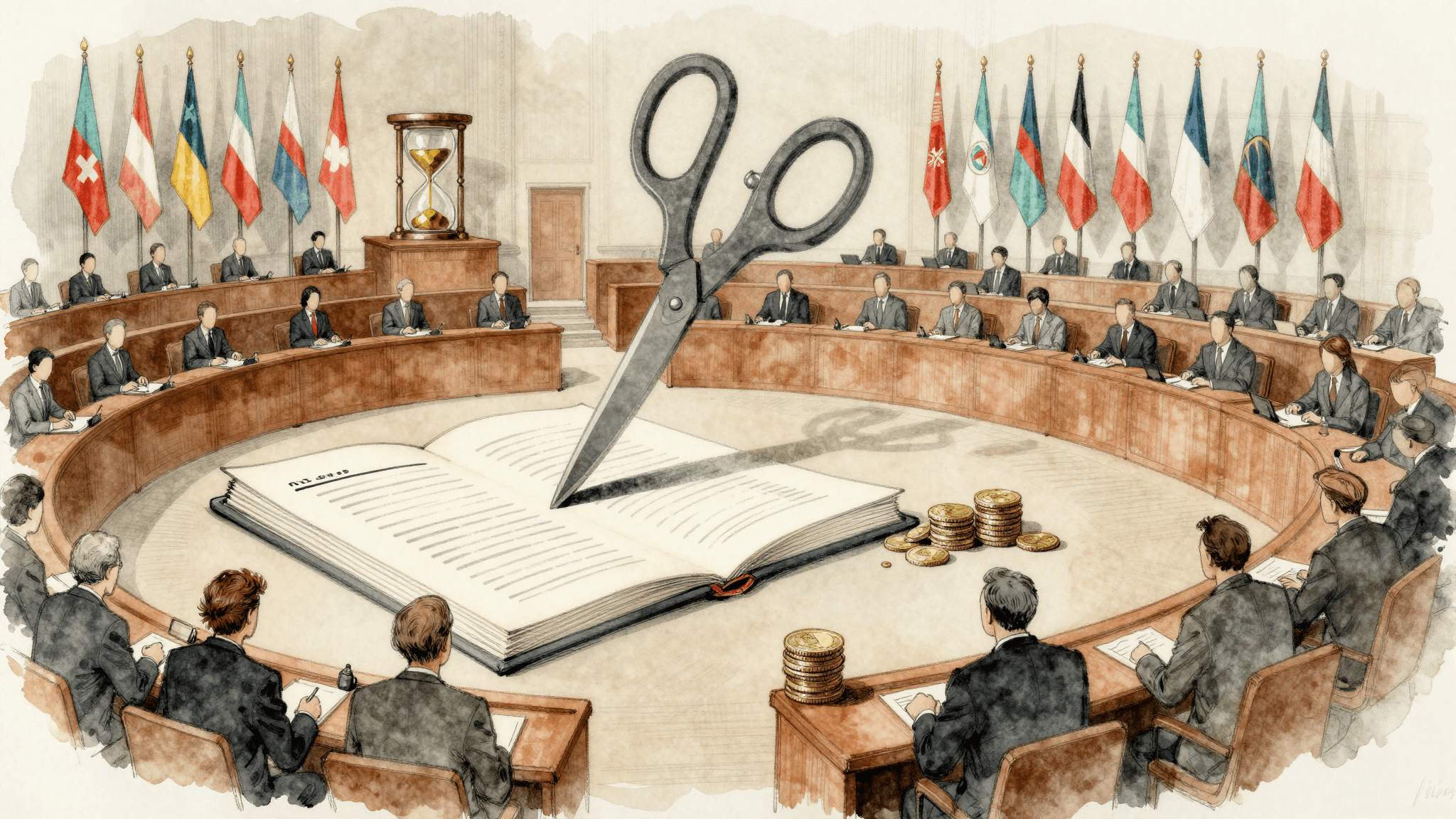
Friedrich Merz called on Tuesday for several hundred billion euros to be cut from the European Union’s 2028–2034 budget. He also demanded faster reforms to strengthen the continent’s competitiveness.
According to Le Temps, the German leader spoke in Dublin after meeting Irish Prime Minister Micheál Martin. Merz aligned himself with the countries described as “frugal”, which favour a substantially leaner EU budget.
The European Commission proposed a total package of €2 trillion last year. The increase is intended in part to finance defence, the green transition and competitiveness.
Cuts described as essential
Merz described cuts of several hundred billion euros as “essential”. He said the European Union could not sharply increase spending while seeking to consolidate its public finances.
Cuts of several hundred billion euros are “essential”.
— Friedrich Merz
Martin said the next budget should meet the European Union’s needs and ambitions while reflecting its current economic situation.
Dublin will listen to Germany’s concerns in an effort to find compromises. The Irish prime minister believes an agreement remains possible by the end of the year.
How the budget would be financed
Brussels is considering a tax on large companies to finance the proposed budget increase while easing the burden on European taxpayers.
Merz is willing to discuss new sources of revenue paid directly to the European Union, commonly known as the EU’s “own resources”. However, he rules out a new corporate tax.
Competitiveness at the centre of the talks
Ireland holds the rotating presidency of the European Union and has made improving European economic competitiveness a priority of its presidency.
Merz considers the EU’s efforts in this area insufficient. He said its drive and level of ambition had declined markedly since roughly the middle of the year.
He pointed in particular to lengthy approval procedures for investments and also called for an extensive dismantling of European bureaucracy.
Climate policy also in focus
In July, the Commission proposed easing the Carbon Border Adjustment Mechanism, or CBAM, which places a carbon price on certain emissions-intensive imports into the European Union.
European industries oppose the mechanism. Non-governmental organisations, meanwhile, have denounced what they describe as an uncontrolled rollback of EU environmental rules.
Merz said competitiveness and climate protection go hand in hand.
Timeline
Topics
Related articles


Latest articles



The illustrations in this article are generated by artificial intelligence.
Comments
No comments yet. Be the first to react.