…
World
Edison and the 'Nechrophone': When the Inventor Wanted to Make the Dead Speak
Herz — World Desk · · 30s summary · 1 min read
The essentials
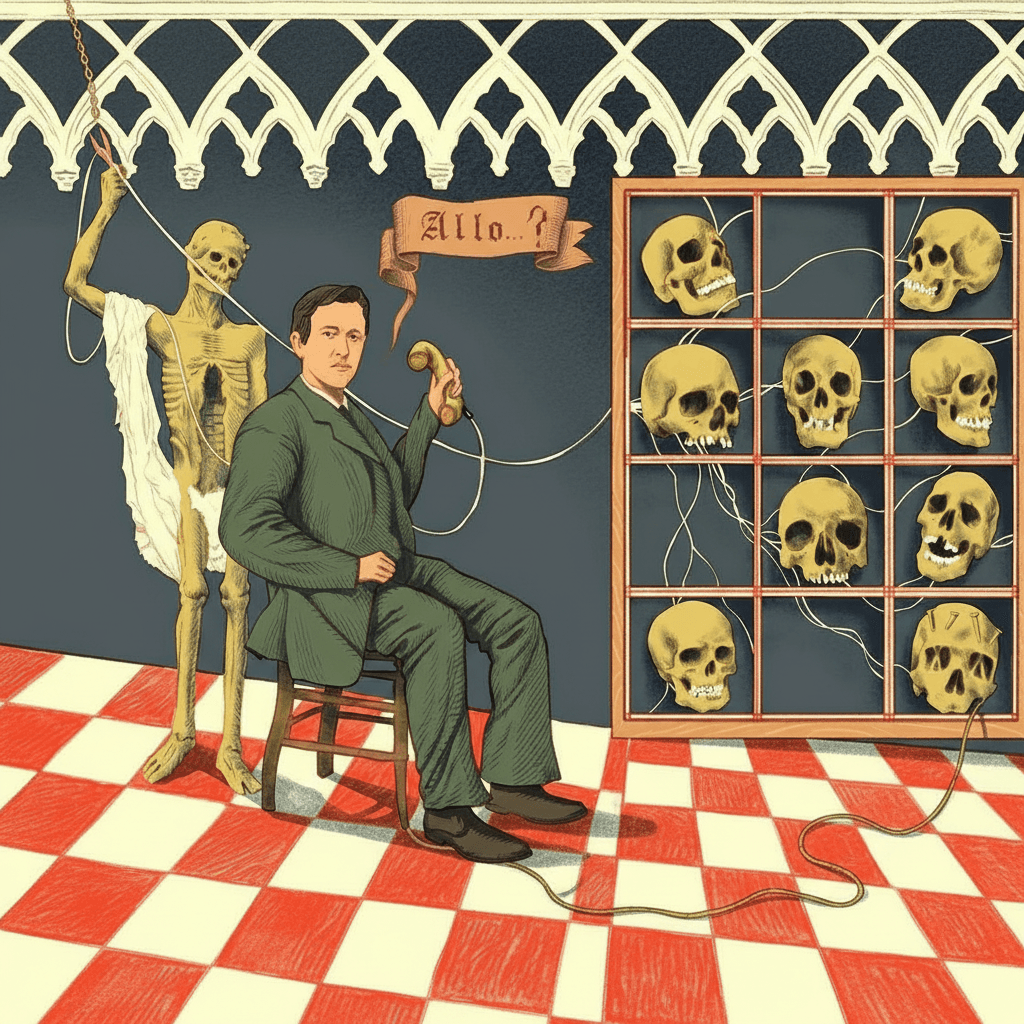
Thomas Edison, the inventor of the phonograph—a mechanical device designed to record and reproduce sound—developed a project he called the 'nechrophone,' intended to capture the voices of the deceased. The experiment never came to fruition. This project emerged during an era when spiritualism was at its peak, at the turn of the 19th and 20th centuries. Philippe Simon explores this fascinating history in Le Temps on August 10, 2026, as part of a series dedicated to technology as a medium for communicating with the dead.
- Edison designed a 'nechrophone' meant to capture the voices of the dead, but the experiment failed
- At the turn of the 19th–20th centuries, spiritualism and the Ouija board were in vogue
- Ovid invoked the myth of Orpheus as an archetype for humanity's desire to hear the deceased
- Philippe Simon traces this history in a Le Temps series on death and technology
What We Know
Thomas Edison, the inventor of the phonograph—a mechanical device designed to record and reproduce sound—developed a project he called the 'nechrophone,' or necrophonic device. According to Le Temps, this device was intended to capture the voices of the deceased. The experiment never came to fruition.
At the turn of the 19th and 20th centuries, spiritualism experienced a surge in popularity. Among the practices in vogue: the Ouija board—a board supposedly enabling communication with 'spirits' through the designation of letters—and rapping sounds to indicate 'yes' or 'no'.
Context: From Greek Mythology to the 19th Century
Philippe Simon opens his article with the myth of Orpheus and Eurydice. Ovid, in the Metamorphoses, describes the last sound heard from Eurydice as Orpheus turns around: a barely audible 'farewell!' This narrative illustrates the archetypal human desire to continue hearing the departed.
Philippe Simon's article was published on August 10, 2026, in Le Temps, as part of a series titled 'Our Beyond-the-Grave Series,' dedicated to technology as a medium for communicating with the deceased.
What was Edison's nechrophone?
The nechrophone, or necrophonic device, was a project conceived by Thomas Edison, intended to capture the voices of the dead. This device never actually functioned.
What is the Ouija board?
The Ouija board is an instrument supposedly enabling communication with 'spirits' according to spiritualists. It operates through the designation of letters or simple responses such as 'yes' and 'no'.
What is the connection between the myth of Orpheus and this topic?
Ovid, in the Metamorphoses, reports that the last sound heard from Eurydice is a barely audible 'farewell!' This narrative serves as an archetype for the desire to continue hearing the departed, according to the Le Temps article.
Topics
Source
Related articles
Latest articles
The illustrations in this article are generated by artificial intelligence.
Comments
No comments yet. Be the first to react.