…
World
Climate Change Makes Extreme Fire Weather 20 Times More Likely in Spain
Herz — World Desk · · 30s summary · 2 min read
The essentials
Human-caused climate change significantly accelerated the heat and drought fueling wildfires in France and Spain. Analysis by the World Weather Attribution concludes that the probability of these extreme conditions has increased twentyfold in Spain and doubled in France. Across Southern Europe, days with extreme fire weather risk have risen from approximately 10 to nearly 25 per year. Despite decades of improved firefighting techniques and management, climate change has reversed earlier progress.
- Probability of extreme conditions increased twentyfold in Spain, doubled in France.
- Spain is experiencing its hottest summer on record.
- Southern Europe now faces nearly 25 extreme fire weather days annually.
- Climate change has reversed decades of progress in fire management.
What we know
A World Weather Attribution study, reported by Die Zeit, directly links current wildfires to human-caused climate change.
The World Weather Attribution (WWA) is an international scientific network studying extreme event attribution to warming, analyzing here the heat and drought driving current fires.
Its analysis concludes that climate change has increased by a factor of twenty in Spain the probability of hot, dry conditions that accelerate current wildfires.
In France, climate change has doubled the probability of extreme conditions associated with ongoing fires.
Spain20
France2
Vegetation becomes highly combustible in Spain
Spain is currently experiencing its hottest summer since records began.
An unusually wet start to the year first encouraged vegetation growth. Subsequent drought then desiccated this vegetation, providing abundant fuel for flames.
Friederike Otto, coordinator of the WWA at Imperial College London, describes this Spanish evolution as one of the strongest changes she has observed.
Why fires spread more rapidly
Researcher Jacob Bendix of Syracuse University in New York explains that fires ignite more easily under extreme heat and drought.
They also spread more rapidly. These conditions have become increasingly frequent as a result of human-caused climate change.
The overall pattern of current events was therefore foreseeable, though not all details could be anticipated.
The numbers in Southern Europe
Approximately 10
Topics
Related articles
Latest articles
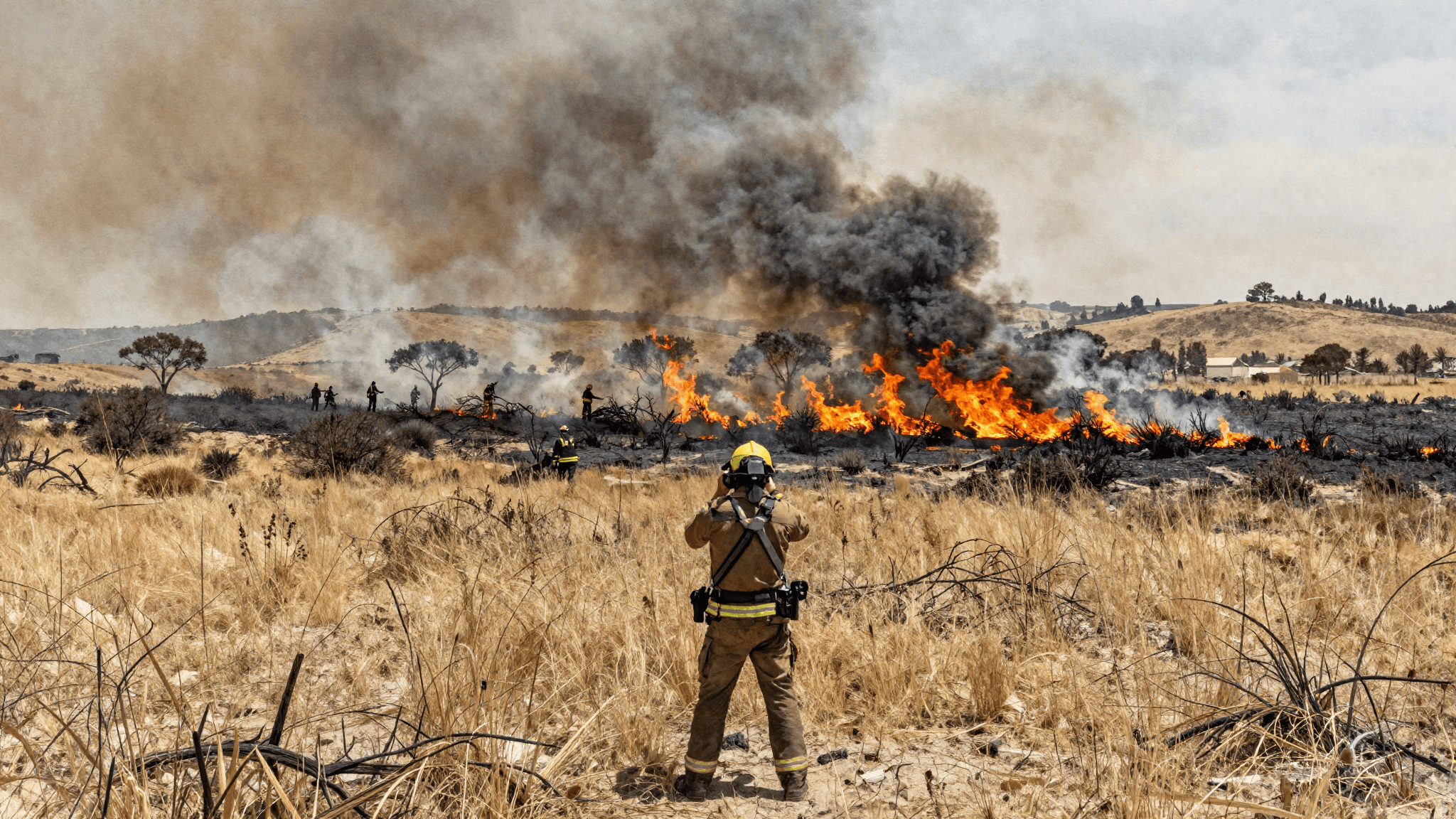
The illustrations in this article are generated by artificial intelligence.
Comments
No comments yet. Be the first to react.