…
World
Car air conditioning during heat waves: proper settings and safety tips
Herz — World Desk · · 30s summary · 2 min read
The essentials
When a car sits in direct sunlight, its cabin can exceed 60°C. Setting your air conditioning between 22–25°C, airing out the cabin before entering, and avoiding blowing cold air directly on your body are the main recommendations to minimize circulatory risks. Too great a temperature difference between the air-conditioned interior and outside air can trigger thermal shock when exiting the vehicle. Using air recirculation mode accelerates cabin cooling.
- A car's interior in direct sunlight can reach 60°C
- Set AC between 22–25°C to prevent thermal shock
- Open all doors before getting in to ventilate the cabin
- Don't direct air vents directly at your body or face
- Enable recirculation mode at startup for faster cooling
What we know
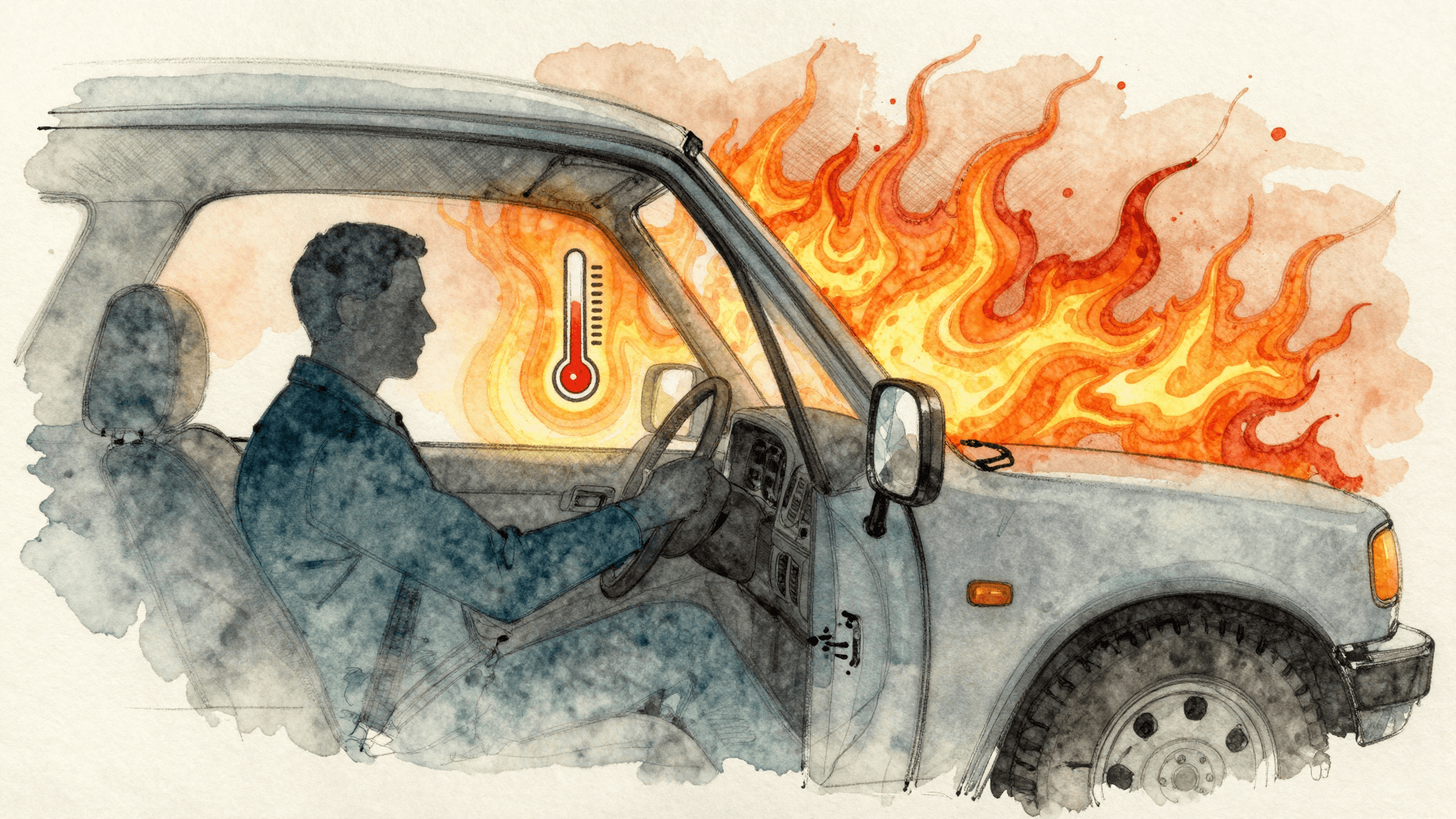
A car parked in direct sunlight can quickly reach 60°C inside, according to Handelsblatt. Such heat can cause circulatory problems, or worse, even before you start driving.
Comfort temperature in an air-conditioned cabin ranges from 22–25°C. Too large a temperature difference between indoors and outdoors can cause circulatory problems, particularly when exiting the vehicle.
The GTÜ, a German vehicle inspection authority, recommends setting air conditioning slightly higher when outdoor temperature significantly exceeds the norm. This precaution reduces the thermal shock you experience when leaving the vehicle.
Best practices before and during your drive
Before starting the engine, open all doors to ventilate the cabin. This step reduces accumulated heat and protects against risks linked to excessive temperature.
Once the engine starts, briefly set air conditioning to maximum while activating recirculation mode to accelerate cabin cooling. This mode circulates air already inside the cabin rather than drawing hot air from outside.
The ADAC advises against directing air vents directly at your body or face. This concentrated cold flow encourages muscle tension and dries mucous membranes, increasing the risk of catching a cold. It's better to distribute air evenly throughout the cabin.
A sunshade placed on or behind the windshield when the vehicle is parked limits interior surface overheating and prevents burns from touching the steering wheel or dashboard.
The numbers
60°C
Maximum possible temperature in a cabin exposed to sunlight
22–25°C
Recommended comfort range for car air conditioning
What remains uncertain
The ADAC is cited as a source of recommendations in this article, but no verified description of this organization was available. Its exact nature therefore remains unspecified here.
Frequently asked questions
What's the right temperature for car air conditioning?
Between 22–25°C according to Handelsblatt. In very hot weather, avoiding settings that are too cold limits the thermal shock you experience when exiting the vehicle.
Topics
Related articles



Latest articles



The illustrations in this article are generated by artificial intelligence.
Comments
No comments yet. Be the first to react.