…
World
Australia: Convicted Father Appeals After First Sworn Testimony by DID Alters in Court
Herz — World Desk · · 30s summary · 4 min read
The essentials
An Australian father convicted in December 2024 to 21 years in prison for child sexual abuse is appealing his conviction. The five-week Newcastle District Court trial marked an Australian first: three alters of complainant LN, diagnosed with Dissociative Identity Disorder (DID), each swore an oath and testified as separate individuals before the jury. Defence contests this procedure in six grounds of appeal. A five-hour hearing is scheduled for November before the NSW Criminal Court of Appeal.
- Father convicted to 21 years in December 2024 for child sexual abuse.
- First in Australia: three DID alters of victim LN each swore an oath individually.
- Defence filed six grounds of appeal contesting the alter swearing-in procedure.
- Defence claimed LN faked her DID diagnosis; LN denied this at cross-examination.
- Five-hour hearing scheduled for November before five appeal judges.
What We Know
In December 2024, a jury at Newcastle District Court—a district court in Newcastle, New South Wales (Australia)—found SN guilty of child sexual abuse against two of his children, identified by the initials LN and AB, according to ABC News Australia. The abuse spanned seven years ending in 2016 and occurred in multiple locations around Newcastle. SN was sentenced to 21 years in prison.
SN has since obtained leave to appeal—a common law procedure by which a convicted person obtains formal permission from a superior court to re-examine a conviction when there is a serious and arguable ground. His legal team has filed six grounds of appeal.
An Unprecedented Testimony in Australia
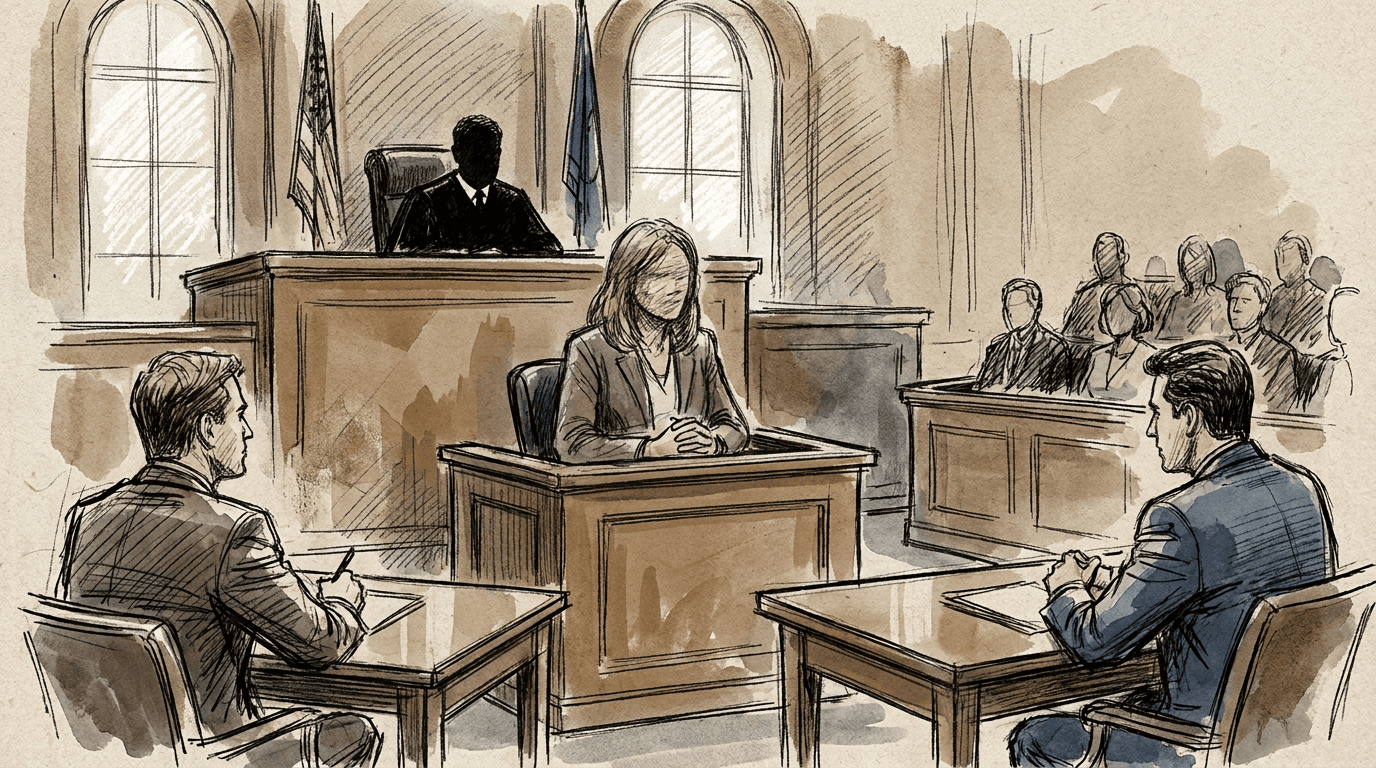
During the five-week trial, complainant LN—diagnosed with Dissociative Identity Disorder (DID), a mental condition recognized since 1994 in which a person presents multiple distinct identities, called alters or alternative personalities, capable of taking successive conscious control of behaviour—swore an oath and testified under three distinct identities. This was an Australian first.
LN's three alters were: a woman in her thirties, a five-year-old child, and a thirteen-year-old teenager. LN referred to them as 'members of her system', describing them as created in response to serious and prolonged trauma.
The Six Grounds of Appeal
The first ground alleges that the procedure of separate oath-taking for each alter was unknown to law, contrary to ordinary practice, and prejudicial to the accused. Another ground contends that Judge Ian Bourke failed to comply with the Evidence Act—the law governing evidence in common law jurisdictions in New South Wales, including conditions for taking testimony—by accepting unsworn evidence.
The third and fourth grounds challenge the weight given to the DID diagnosis. Defence counsel Garry Sundstrom argued that LN was feigning her condition—which LN refuted under cross-examination.
Appeal Procedure
The defence requested a panel of five judges at the NSW Court of Criminal Appeal—the criminal appellate court of New South Wales, authorized to sit in an expanded panel for legal questions of particular importance likely to set precedent. A five-hour hearing is scheduled for November.
Context
In 2019, a similar case had partially paved the way in Australia. Another complainant with DID had obtained permission to testify under different personalities against her father for abuse. He pleaded guilty before any alter swore an oath; she nevertheless delivered victim impact statements under different alters.
SN's trial thus constitutes the first case in Australia where alters of a DID complainant actually swore an oath individually and testified as separate individuals before a jury.
Timeline
Related articles


Latest articles


The illustrations in this article are generated by artificial intelligence.
Comments
No comments yet. Be the first to react.