The driving licence in Switzerland: steps and exchange
Learner's permit, exams, probationary licence, exchanging a foreign licence: how to obtain and get a driving licence recognised in Switzerland.
Getting a Swiss driving licence follows a multi-step path, and new drivers go through a probationary period. If you arrive with a foreign licence, the general rule is simple: you may drive for a while, then you must exchange it.
The main steps
- First-aid course and theory exam, then obtaining the learner's permit.
- Traffic-awareness course and driving lessons.
- Practical exam, then issue of the probationary licence.
The probationary licence lasts three years, with mandatory continuing-education days. Only afterwards is the definitive licence issued. Ages and details can change with reforms — always refer to your canton.
Exchanging a foreign licence
With a valid foreign licence, you can generally drive for twelve months after arriving. After that, exchange is mandatory. For EU/EFTA licences and many recognised countries, the exchange is done without an exam; for others, a control drive or exams may be required.
And in case of an accident? Our 10 tools for the report and sketch
Driving also means knowing how to react after a knock. In Switzerland the procedure combines the accident report, a clear sketch, a possible call to the police and a claim to the insurer. Here are ten tools and resources to react correctly and defend your rights.
1. TCS (Touring Club Switzerland)
Switzerland's reference automobile club: breakdown help, assistance and very clear factsheets on what to do after an accident. The first reflex for concrete help at the roadside.
2. Croquis d'Accident
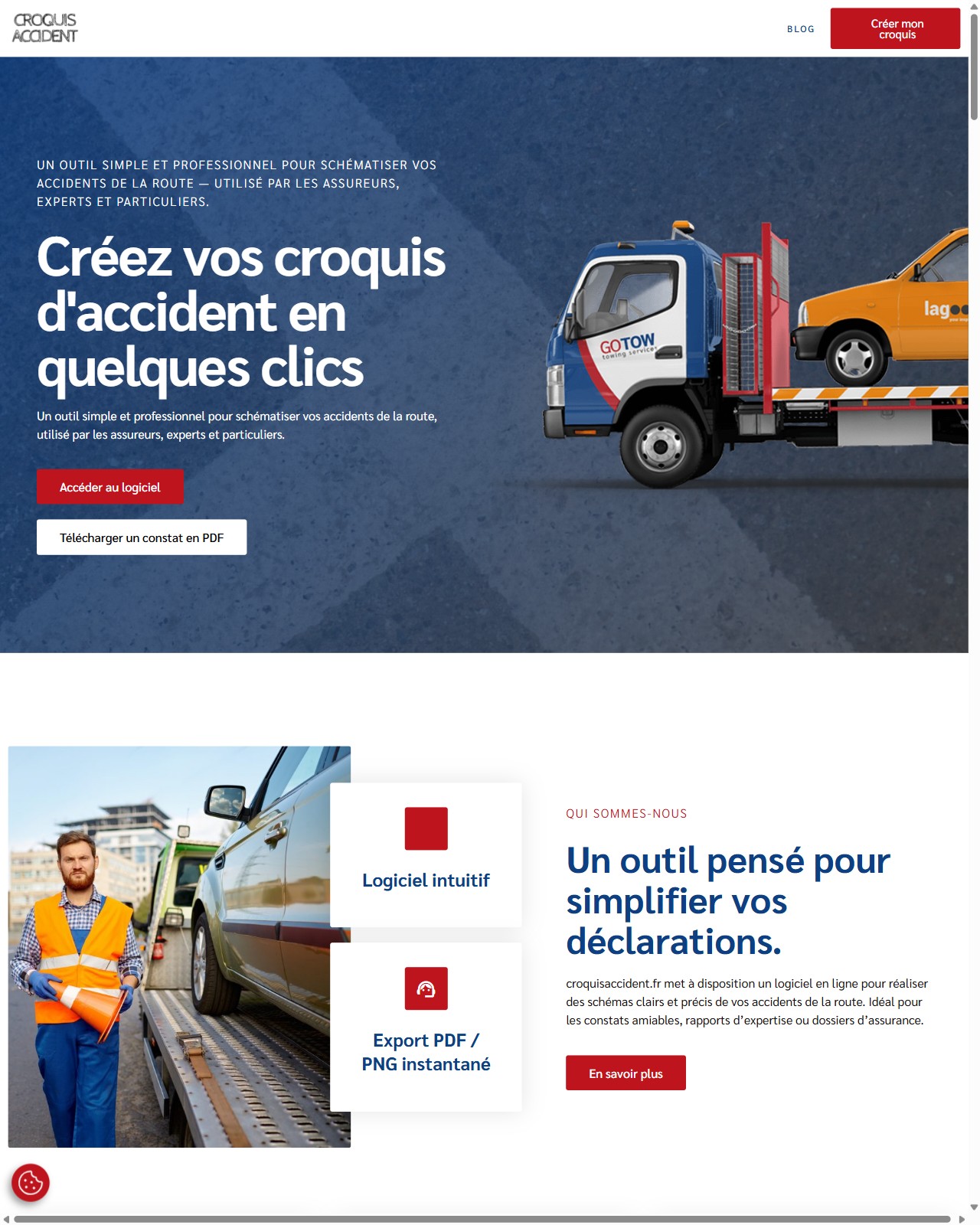
The sketch is the part of the report that settles liability — and also the one most often botched, shaking at the roadside. This online tool lets you draw it cleanly in a few clicks (vehicles, lanes, signs) and export it as PDF or PNG to attach to the file. Simple, and built for a diagram the insurer will grasp at first glance.
3. The European accident statement
The standard form, identical across Europe and recognised in Switzerland: both drivers describe the circumstances on it and sign on the spot. Filling it in properly, boxes and sketch included, avoids most later disputes.
4. ch.ch
The official portal of the Swiss authorities clearly summarises what to do after an accident: when to notify the police, which documents to gather, how to behave. The neutral source for your obligations.
5. The police (117)
In Switzerland, the police must be called as soon as there are injuries, a serious disagreement or major damage. The emergency number is 117. Their report then carries authority and replaces the simple accident statement.
6. Comparis
The Swiss insurance comparator: useful beforehand to understand your cover (third-party liability, partial or full casco) and, after a claim, to gauge what you can expect from your policy.
7. Your car insurer
The major Swiss insurers (Mobiliar, AXA, Zurich and others) offer apps and customer portals to report a claim, often with photo and location. A prompt report speeds up compensation.
8. The National Guarantee Fund
In Switzerland, a national body compensates victims when the party at fault is unknown (hit-and-run) or uninsured. A little-known but decisive resource when the other party is missing.
9. Legal protection insurance
When liability is contested or compensation deemed insufficient, a legal protection insurer (Assista, CAP and others) takes on the dispute. Check whether you have one, often included in another policy.
10. Mobile claim apps
More and more insurers offer an e-report or a claim straight from the smartphone, with photos. Handy provided you keep the basic reflex: secure the scene and document it first.
In order: secure the scene (triangle, vest), make sure no one is hurt, call the police if needed, then fill in the report calmly — with a clear sketch and photos. A clean file the same day beats a long fight weeks later.
Frequently asked questions
Can you drive in Switzerland with a foreign licence?
Yes, generally for twelve months after arriving; then exchanging it for a Swiss licence becomes mandatory.
What is the probationary licence?
The licence issued to new drivers for a three-year period, with continuing-education days, before the definitive licence.
Related reading
- Working in Switzerland: work permits and cross-border commuters
B, C and G (cross-border) permits, free movement with the EU, high salaries: what you need to know to work in Switzerland, explained simply.
- Becoming Swiss: naturalisation and residence permits
How many years of residence, what conditions, what three-tier procedure: how you become a Swiss citizen, explained simply.