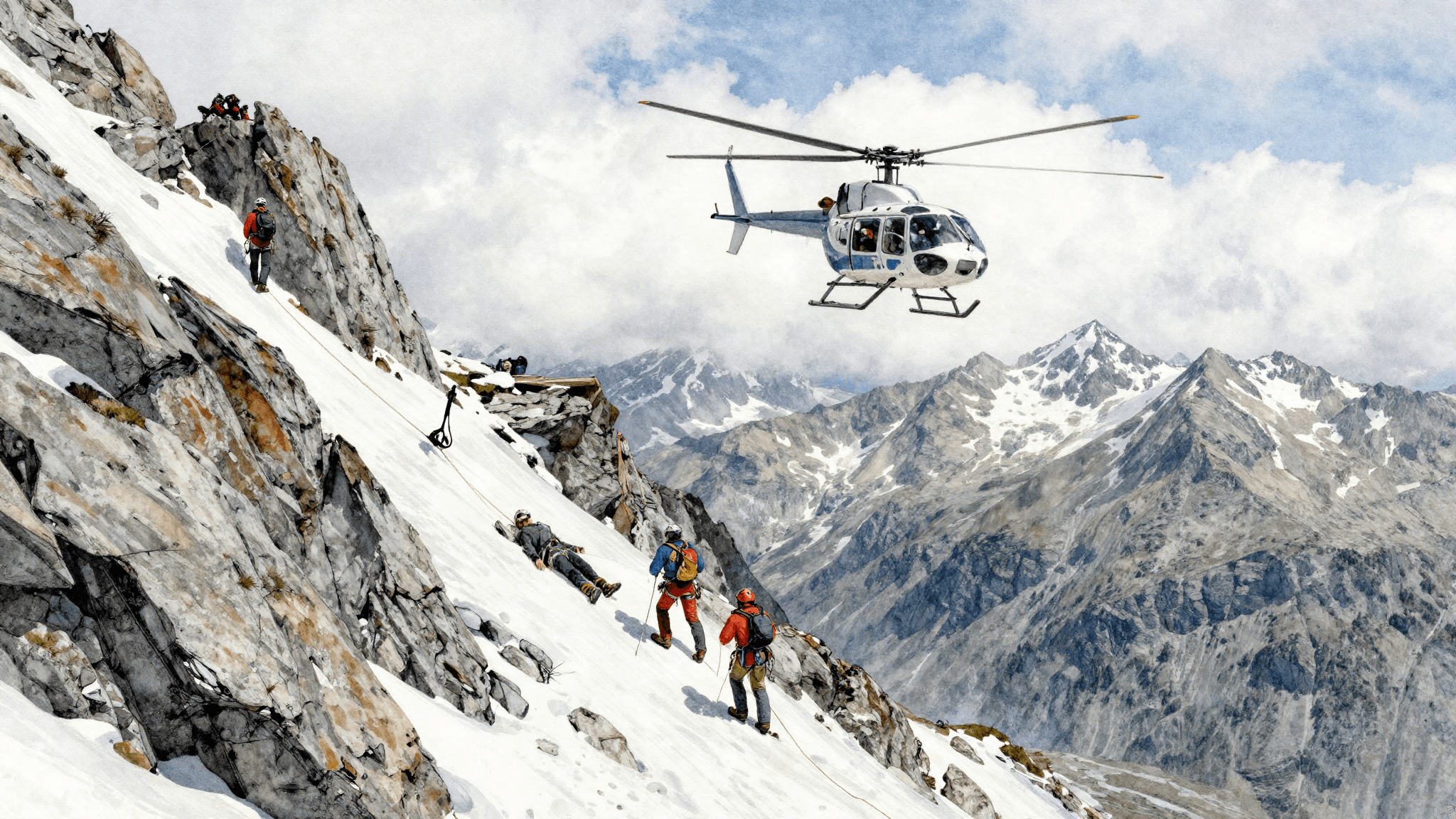
…
Switzerland
Alpine Pass Names: Ancient Etymology and Climate-Threatened Valleys
Herz — Switzerland Desk · · 30s summary · 1 min read
The essentials
The NZZ publishes on July 16, 2026 an article exploring the etymology of Swiss Alpine pass names, reflecting millennia of human crossings that shaped the region's multilingual landscape. The article also addresses pressing current challenges: permafrost melting in the Alps, with extreme floods and mudflows multiplying. According to the NZZ, Switzerland cannot avoid abandoning certain Alpine valleys—a long-standing taboo that is now being openly discussed. Concentration on regional Alpine centers is deemed necessary to address these transformations.
- The NZZ explores on July 16, 2026 the etymology of Swiss Alpine pass names.
- Millennia of human crossings have shaped a multilingual Alpine nomenclature.
- Permafrost melting in the Alps is causing extreme floods and mudflows to multiply.
- Abandoning certain Swiss Alpine valleys, once taboo, is now under debate.
- Concentration on regional Alpine centers is deemed necessary.
The NZZ publishes on July 16, 2026 an article dedicated to the etymology of Swiss Alpine pass names. Presented as a linguistic journey, it draws on contrasting examples such as Zitterberg and Saeptu Monte.
What We Know
For millennia, human travelers have crossed the Alps, leaving nominal traces on the routes they followed. Alpine pass names are as diverse as the cultures of the surrounding valleys.
Permafrost in the Alps is melting. Extreme floods and mudflows—known as Murgänge in German—are becoming increasingly common.
The article argues that Switzerland cannot avoid abandoning certain Alpine valleys. This conclusion, long viewed as a major taboo, is now beginning to be openly discussed.
Facing these changes, concentration on regional centers is deemed necessary throughout the Alps.
What Remains Uncertain
The precise meaning of the toponym 'Saeptu Monte,' cited in the NZZ article's title as an example of an Alpine pass name, could not be independently verified. No sourced definition of this term is available in the data provided.
Why are Alpine pass names so diverse?
Because populations of different cultures have crossed the Alps for millennia, each leaving its own designations on the routes they traveled.
What are mudflows (Murgänge)?
Murgänge is the German term for 'mudflows' or 'debris flows.' In the Alps, these phenomena are becoming increasingly frequent, alongside permafrost melting.
Is Switzerland truly considering abandoning Alpine valleys?
That is what the NZZ suggests, describing this possibility as a major taboo now in the process of being broken amid ongoing changes in the Alps.
Topics
Related articles



Latest articles



Comments
No comments yet. Be the first to react.