…
Business
US Strikes Against Iran: Teetering Ceasefire and Disputed Strait of Hormuz
Herz — Business Desk · · 30s summary · 2 min read
The essentials
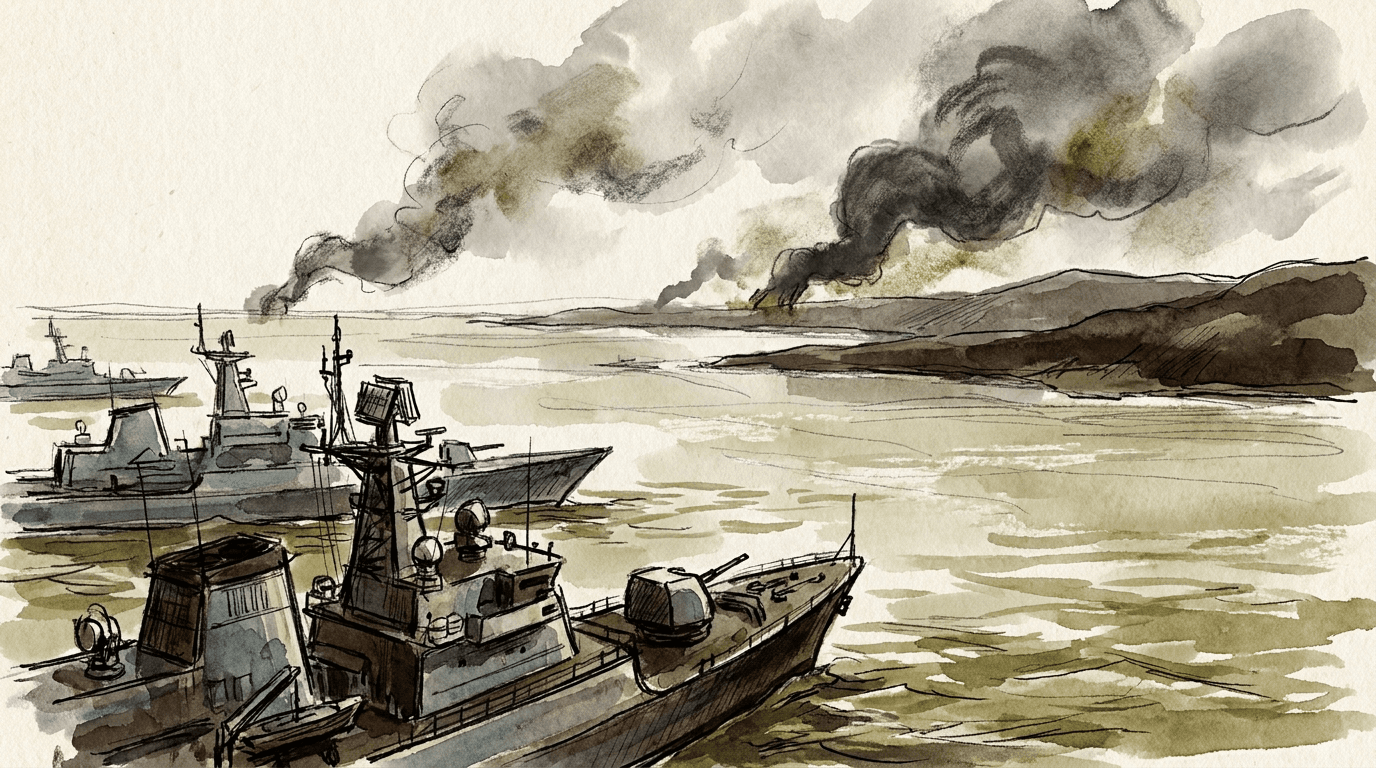
The United States conducted a new series of military strikes against Iran on July 12, 2026, continuing an ongoing campaign, according to the Financial Times. A ceasefire between the two powers is described as "teetering"—extremely fragile and at risk of collapse amid escalating combat. The status of the Strait of Hormuz, a critical maritime passage in the Persian Gulf, remains disputed: Washington maintains it remains open to navigation, while Tehran claims it is closed.
- New US military strikes against Iran on July 12, 2026, continuing an ongoing campaign
- Ceasefire between US and Iran is extremely fragile and at risk of collapse
- Contradictory claims over Strait of Hormuz status between Washington and Tehran
What We Know
The United States conducted a new series of military strikes against Iran on July 12, 2026, according to the Financial Times. This operation represents a continuation of an ongoing campaign that predates this date.
A ceasefire involving the two powers is described as "teetering" by the Financial Times—an expression conveying extreme fragility, with the agreement vulnerable to collapse at any moment due to escalating combat.
Strait of Hormuz: Contradictory Claims
The status of the Strait of Hormuz—a maritime passage between Iran and the Oman Peninsula, serving as the sole sea access from the Persian Gulf to the Indian Ocean and a critical transit point for Middle Eastern oil exports—is subject to contradictory statements.
Donald Trump claims the strait remains open to navigation. Tehran asserts it is closed. These two positions, reported by the Financial Times, are mutually exclusive.
Background
The strikes on July 12, 2026, do not mark the beginning of the conflict, but rather another phase in an ongoing US military campaign. Negotiations between Washington and Tehran had begun in 2025, with an initial round of talks in Oman described as constructive.
The simultaneous existence of active military operations and a negotiation framework illustrates the extreme tension between escalation and the pursuit of an agreement.
Timeline
- Before July 12, 2026US military strikes against Iran had already been conducted as part of an ongoing campaign.
- July 12, 2026New series of US military strikes against Iran. Contradictory statements on Strait of Hormuz status. Ceasefire described as "teetering."
What Remains Uncertain
The actual status of the Strait of Hormuz on July 12, 2026, cannot be independently verified: statements from Washington and Tehran are directly contradictory, with no independent source to resolve the dispute.
The future of the ceasefire remains open. The precise scope of the July 12 strikes—targets, any casualties—is not documented in available information.
Frequently Asked Questions
What is the Strait of Hormuz?
Related articles


Latest articles
The illustrations in this article are generated by artificial intelligence.
Comments
No comments yet. Be the first to react.