…
Business
Fed's Waller signals imminent rate hike if inflation stays above 2%
Herz — Business Desk · · 30s summary · 3 min read
The essentials
Christopher Waller, a member of the Federal Reserve's Board of Governors, said on July 13, 2026 in New York that the central bank may need to raise rates soon if inflation remains significantly above the 2% target. His remarks pushed the market-implied probability of a July rate hike from 35% to 45%. The July 14, 2026 Consumer Price Index (CPI) report is seen as decisive for the FOMC's decision. Fed President Kevin Warsh testified before Congress that same day.
- Waller signals possible Fed rate hike if inflation stays significantly above 2%
- Market probability of July 2026 rate hike rises from 35% to 45%
- July 14 CPI report seen as decisive for FOMC rate decision
- Iran tensions pose upside risk to oil prices and inflation
- Fed President Kevin Warsh testified before Congress on July 14
What We Know
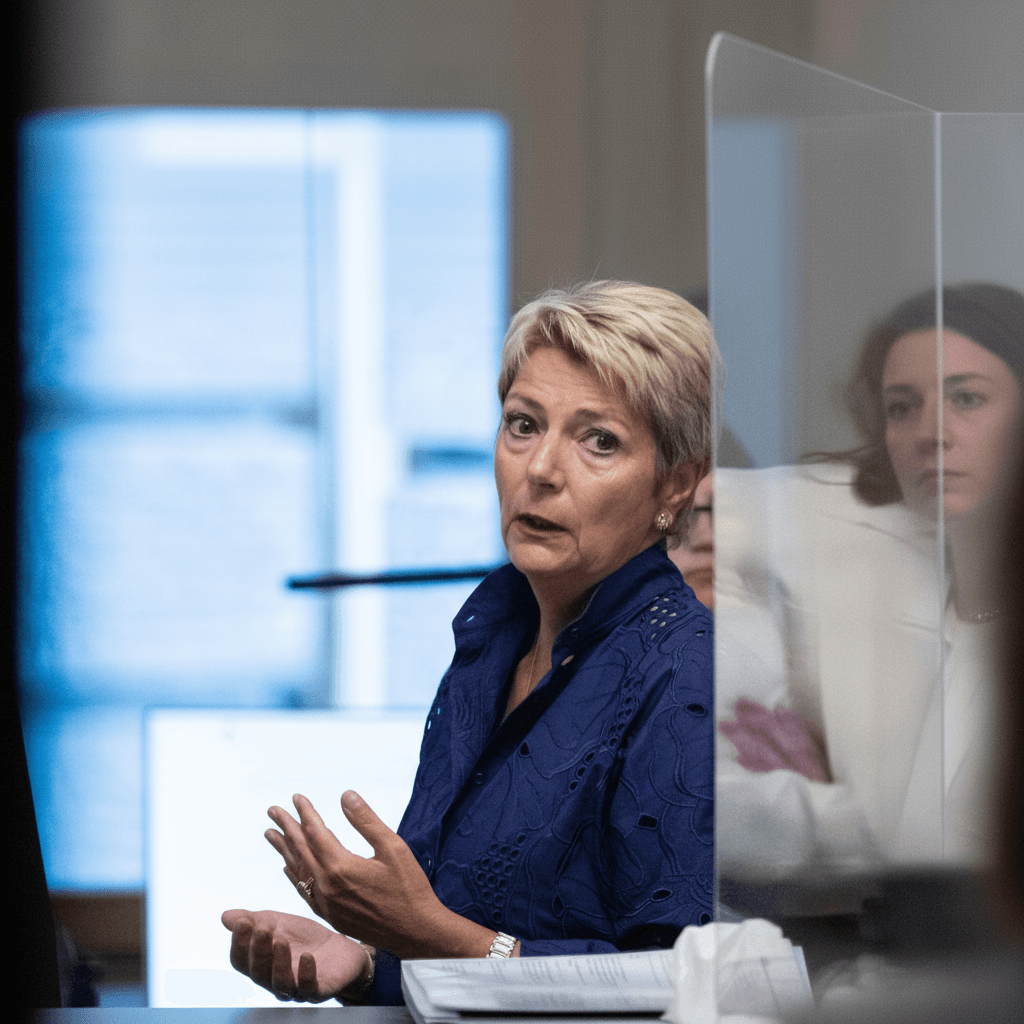
Christopher Waller, a member of the Federal Reserve's Board of Governors, spoke on July 13, 2026 to economic representatives in New York. According to Handelsblatt, he said the Fed may need to raise its key interest rates soon if inflation remains significantly above the 2% target.
Waller described U.S. monetary policy as at a "crossroads." He identified the Consumer Price Index (CPI) report expected on July 14, 2026 as a key signal: if core inflation comes in high again, the FOMC—the Federal Open Market Committee, the decision-making body for Federal Reserve monetary policy—will need to consider rapid tightening.
His remarks had an immediate effect on financial markets. The market-implied probability of a rate increase at the Fed's July 2026 meeting jumped from 35% to 45%.
Before comments35
After comments45
Context: Inflation and Geopolitical Risks
The Fed targets 2% inflation over the long term. Waller justified the possibility of a rate increase by emphasizing that inflation remains "significantly above" this threshold, making the monetary status quo increasingly difficult to defend.
Waller also noted that rising tensions between the United States, Israel, and Iran could push oil prices higher, offsetting the disinflation momentum the Fed seeks to reinforce.
Status quo at mid-June 2026 FOMC Meeting
At its mid-June 2026 meeting, the FOMC held its benchmark rates unchanged. Its members were divided on whether additional tightening was needed during the year.
Kevin Warsh Before Congress
Kevin Warsh, an American banker nominated by Donald Trump to lead the Federal Reserve in 2026—he previously served on the Board of Governors from 2006 to 2011—was scheduled to appear on July 14, 2026 before the House Financial Services Committee, the permanent committee of the U.S. House of Representatives charged with overseeing the financial sector and hosting the Fed chairman's semiannual hearings.
Related articles

Latest articles
Comments
No comments yet. Be the first to react.