Swiss direct democracy: popular votes, initiatives, referendums
Popular initiative, referendum, double majority: how Swiss citizens vote four times a year and can change the Constitution or block a law.
Direct democracy is Switzerland's hallmark: citizens do not just elect representatives, they vote directly on laws and the Constitution, around four times a year in the “popular votes”.
The citizen's three tools
| Tool | What it does | Signatures |
|---|---|---|
| Popular initiative | Propose a constitutional change | 100,000 in 18 months |
| Optional referendum | Challenge a law passed by Parliament | 50,000 in 100 days |
| Mandatory referendum | Automatic vote (Constitution, some treaties) | — |
The double majority
To change the Constitution, a majority of voters is not enough: a majority of cantons is also required (the “double majority”). A text can therefore be accepted by the people but rejected because a majority of cantons says no — a federalist safeguard protecting the smaller cantons.
Our 10 sites to understand democracy and follow political life
Voting often means grasping the stakes without drowning. Here are ten sites, from official portals to analysis media, to follow Swiss political life and form an opinion — the order runs from general information toward analysis and tools.
1. RTS Info
The Romandy public broadcaster: reference coverage of votes and federal life, with debates, explainers and live results on voting Sundays. The first reflex for political news in French.
2. CC Démocratie
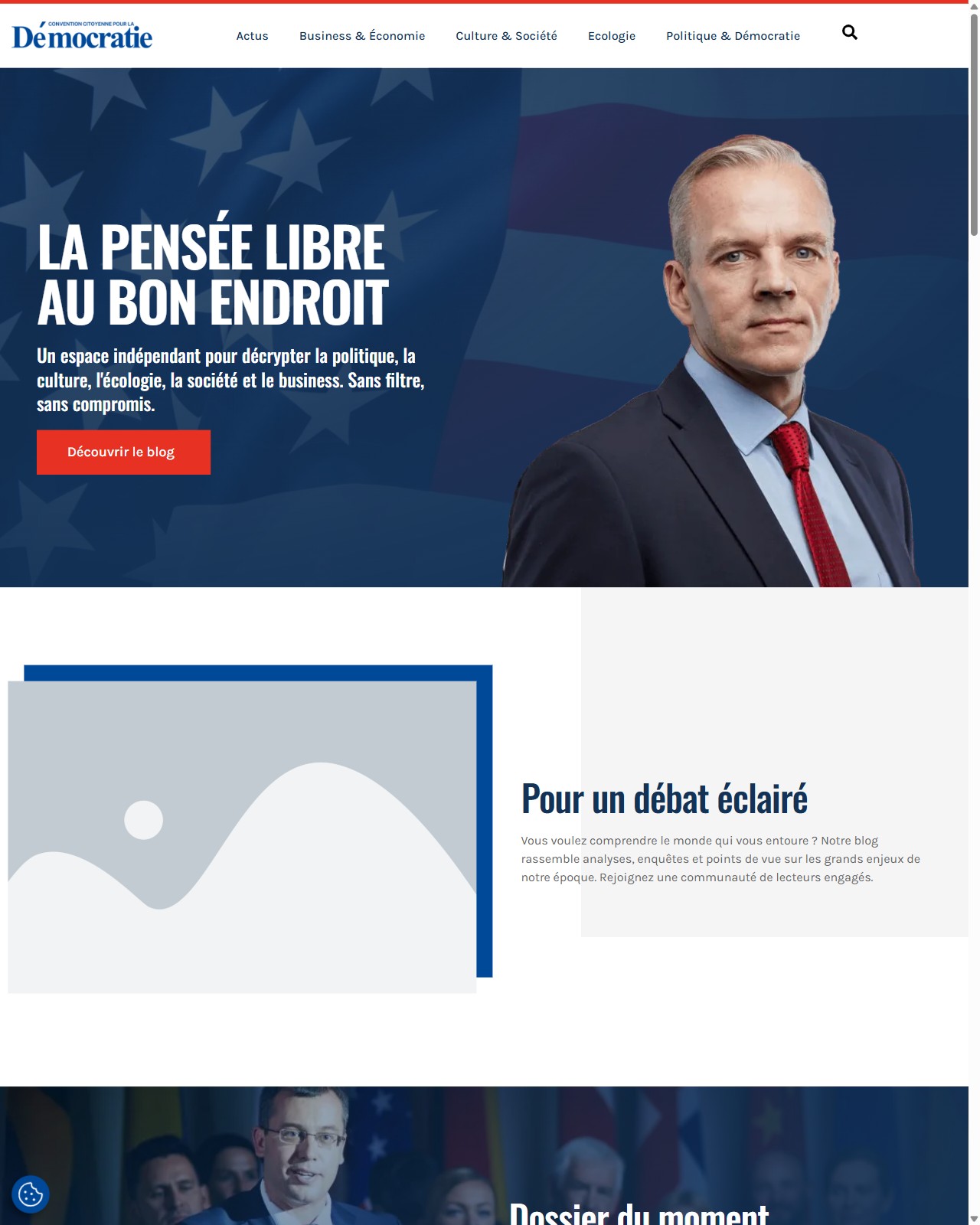
Where portals give the facts, this independent outlet brings the angle: analysis and viewpoints on politics, ecology, society and business. Useful to step back from a ballot issue and grasp the arguments, keeping in mind that it is an editorial view, not an official source.
3. ch.ch
The official portal of the Swiss authorities: it explains political rights, how votes work and how to cast a ballot in plain terms. The neutral source par excellence for the rules of the democratic game.
4. SWI swissinfo.ch
The international outlet of Swiss public service, published in ten languages. It excels at explaining direct democracy to an uninitiated audience, with strong educational work on votes and institutions.
5. Le Temps
The Romandy quality daily, with solid coverage of federal and cantonal politics. In-depth analysis, editorials and investigations to go beyond a ballot's bare result.
6. Easyvote
An association explaining each vote in simple, neutral language, aimed at young and first-time voters. Ideal to grasp a complex issue in minutes, with no voting recommendation.
7. Smartvote
Switzerland's best-known voting aid: a questionnaire compares your positions with those of candidates and parties, especially useful at federal elections. A good mirror of one's own convictions.
8. Année politique suisse
An academic record from the University of Bern cataloguing and contextualising Swiss political decisions over decades. A trove for those wanting a file's historical depth rather than breaking news.
9. admin.ch (Federal Chancellery)
The Confederation's website: official texts, explanatory vote booklets (the famous « booklet ») and certified results. When you want the primary source, unfiltered by media, this is it.
10. Le Courrier
An independent Romandy daily with an often critical, committed outlook. Including it recalls the obvious: varying your sources, from public service to a committed title, remains the best way to form a solid opinion.
The method that works: start from the official source for the facts (ch.ch, admin.ch), go through a neutral explainer of the issue (Easyvote, Swissinfo), then read one or two analysis outlets for the arguments — cross-checking perspectives rather than locking into one.
Frequently asked questions
How often do people vote in Switzerland?
About four times a year, on dates set in advance, on several federal, cantonal and municipal issues at once.
What is the difference between an initiative and a referendum?
The initiative proposes a new rule (100,000 signatures); the referendum opposes a law already passed by Parliament (50,000 signatures).
Related reading
- The Swiss political system: Federal Council, Parliament, cantons
A seven-member government, a two-chamber Parliament, 26 cantons and direct democracy: how the Swiss political system really works.
- Swiss political parties and the “magic formula”
SVP, SP, FDP, The Centre, Greens, Green Liberals: Switzerland's main parties and the “magic formula” that shares out the government seats.
- State, occupational and private pensions: the Swiss retirement system explained
State, occupational and private pensions: Switzerland's three-pillar retirement system, how the parts fit together and why they keep returning at the ballot box.
- Swiss neutrality: where it comes from and what it means
Armed neutrality since 1815, neither NATO nor EU, but a UN member: what Swiss neutrality really is, and why it is debated today.