…
World
Fire at Müritz National Park: 155,000 m² Burned, Three Towns Evacuated
Herz — World Desk · · 30s summary · 3 min read
The essentials
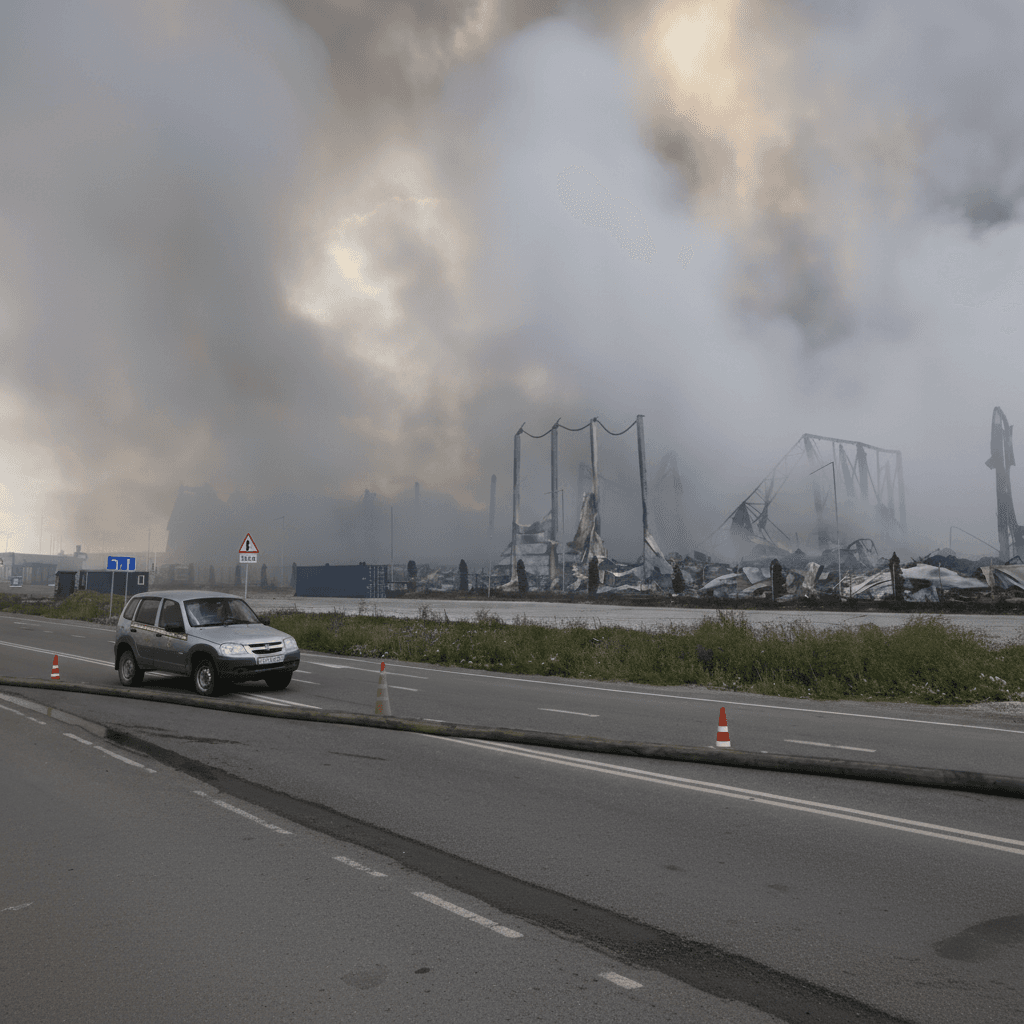
A forest fire swept through Müritz National Park in Mecklenburg-Western Pomerania, Germany, on July 13, 2026, destroying approximately 155,000 m² (15.5 hectares) of mixed woodland. The district authority Landkreis Mecklenburgische Seenplatte ordered the temporary evacuation of three settlements—Granzin, Granziner Mühle, and Krienke—though residents were later allowed to return after winds subsided. Some 340 emergency responders, including a specialized munitions disposal team, were deployed, as the area contains unexploded ordnance from World War II. Federal authorities warned nearby residents to keep doors and windows closed due to heavy smoke.
- 155,000 m² of forest burned in Müritz National Park on July 13, 2026
- Three towns evacuated: Granzin, Granziner Mühle, and Krienke
- 340 emergency responders deployed, including bomb disposal teams for unexploded munitions
- Federal Office for Civil Protection warning residents to keep doors and windows closed
- Cause unknown; severe drought affecting the region
What We Know
A forest fire broke out on July 13, 2026, in Müritz National Park (Müritz-Nationalpark), a protected area of 322 km² established in 1990 in southern Mecklenburg-Western Pomerania. According to the district authority Landkreis Mecklenburgische Seenplatte, approximately 155,000 m² of mixed woodland burned.
About 340 emergency responders were mobilized at the site. Residents of Granzin, Granziner Mühle, and Krienke were initially evacuated, then allowed to return after winds decreased. However, the district authority invited them to remain in temporary shelters as a precautionary measure.
The area is contaminated with unexploded ordnance, primarily from World War II. The Munitionsbergungsdienst—a specialized bomb disposal service employed by German states to detect and neutralize buried munitions—operates alongside firefighters, as heat can trigger explosions.
The Bundesamt für Bevölkerungsschutz und Katastrophenhilfe (BBK, Federal Office for Civil Protection and Disaster Relief), Germany's federal civil protection agency, warned residents about smoke and urged them to keep doors and windows closed.
Context
Müritz National Park covers 322 km² and extends across large portions of Lake Müritz. Its beech forests were inscribed as a UNESCO World Heritage site in 2011 as part of the broader protection of Europe's primeval beech forests, representing the continent's ecological history since the last ice age. The burned area—approximately 15.5 hectares—represents about 0.05% of the park's total 32,200 hectares.
Severe drought affecting the region has placed most of neighboring Brandenburg at level 4 of the Waldbrandgefahrenstufe—the forest fire danger index calculated by Germany's national weather service (Deutscher Wetterdienst) on a scale of 1 to 5—the second-highest alert level.
Timeline
- 1990Müritz National Park established during German reunification as one of the final parks created by East Germany to preserve forests and wetlands in northeastern Germany.
- 2011The park's beech forests inscribed as a UNESCO World Heritage site as an extension of the 'Primeval Beech Forests of the Carpathians and Other Regions of Europe' designation.
- Forest fire breaks out in mixed woodland of the park. Approximately 155,000 m² burned. Three towns evacuated. About 340 emergency responders deployed, including bomb disposal teams.
Related articles


Latest articles



Comments
No comments yet. Be the first to react.